The 6.7 Powerstroke diesel engine is Ford's flagship powerplant for heavy-duty trucks. Since its introduction in 2011, this engine has powered the F-250, F-350, and F-450 Super Duty trucks. Many owners love their trucks but want more from them. We seek better performance, improved fuel economy, and increased reliability. Whether you use your truck for work, towing, or daily driving, the right 6.7 Powerstroke performance upgrades can make a significant difference in how your vehicle performs.
Understanding which modifications deliver the best results helps you spend your money wisely. Some upgrades prevent expensive failures, while others unlock hidden power. This guide will walk you through the best mods for the 6.7 Powerstroke and how to improve 6.7 Powerstroke performance:
Must-Have Reliability Mods
1. CP4 Disaster Prevention Kit
The CP4.2 high-pressure fuel pump is the weakest link in the 6.7 Powerstroke engine. When this pump fails, it sends metal shavings throughout your entire fuel system. This contamination can destroy your injectors, fuel lines, and other expensive components. Repair costs often exceed $10,000.
A CP4 Disaster Prevention Kit should be your first upgrade. This kit typically includes:
- A fuel filtration system that catches debris if the pump fails
- A bypass system that protects downstream components
- Warning indicators that alert you to problems
Installing this kit is like buying insurance for your engine. It won't make your truck faster, but it can save you from a catastrophic repair bill. Many diesel experts consider this modification essential, especially for trucks used for business or towing.
2. Cold-Side Charge Pipe
The factory cold-side charge pipe on 6.7 Powerstroke engines is made of plastic. This pipe carries pressurized air from the intercooler to the engine. Under high boost pressure, especially in modified trucks, this plastic pipe can crack or burst.
When the charge pipe fails, your truck loses power immediately. You might be towing a trailer uphill or merging onto a highway when it happens. An upgraded aluminum charge pipe prevents this problem. The metal construction handles much higher pressure without failing.
This upgrade is relatively inexpensive and easy to install. It provides peace of mind, especially if you plan to increase boost pressure with other modifications. Think of it as replacing a weak link before it breaks.
Performance & Power Boosts
3. ECM Tuning
Engine Control Module (ECM) tuning is the most effective 6.7 Powerstroke reliability upgrade to increase power. The factory programming in your 6.7 Powerstroke is conservative. Ford tunes these engines for reliability across all conditions and to meet emissions requirements. However, this leaves significant power untapped.
A quality tune can add 100-150 horsepower and 200-300 lb-ft of torque. Professional tuners modify fuel delivery, turbo boost, and transmission shift points. Many tuning devices offer multiple power levels. You might select an economy tune for daily driving and switch to a towing tune when hauling heavy loads.
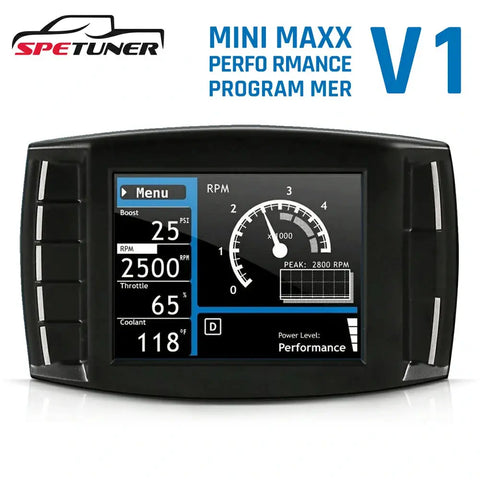
Unlock the hidden potential of your 6.7 Powerstroke with the Mini Maxx V1. This pre-loaded tuner offers four power levels (Stock to Race), removes top speed limiters, and provides real-time monitoring of vital engine stats like EGTs and boost. It's the most cost-effective way to add up to 150HP safely.
Checking out the Best Tuner for 6.7 Powerstroke in 2025 is a great place to start. These tunes are developed through extensive testing and dyno work. They balance power gains with engine safety. Avoid cheap tunes from unknown sources, as poorly written software can damage your engine.
Modern tuning devices also allow you to monitor engine parameters. You can watch exhaust gas temperature, boost pressure, and transmission temperature in real time. This information helps you drive more safely and catch problems early.
4. EGR System Modifications
Important Legal Notice: EGR delete modifications are intended for off-road and racing use only. These modifications are not legal for on-road vehicles in most areas due to emissions regulations. Always check your local laws before installation.
The Exhaust Gas Recirculation (EGR) system on your 6.7 Powerstroke redirects exhaust gases back into the intake to reduce emissions. While this helps the environment, it can cause carbon buildup, reduced power, and reliability issues over time. For trucks used exclusively off-road or in racing applications, EGR system modifications can provide several benefits.
Benefits of EGR modifications for off-road use include:
- Reduced carbon buildup in the intake system
- Lower exhaust gas temperatures
- Improved throttle response
- Better long-term engine reliability
- Reduced maintenance costs from EGR-related failures
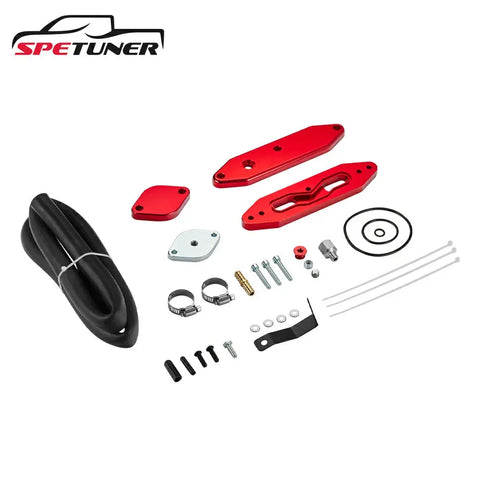
Eliminate the risk of EGR cooler failure and keep your intake clean. This kit completely removes the EGR valve and cooler assembly for 2011-2019 models. Includes precision-machined block-off plates and high-temp coolant hoses to ensure a leak-free installation.
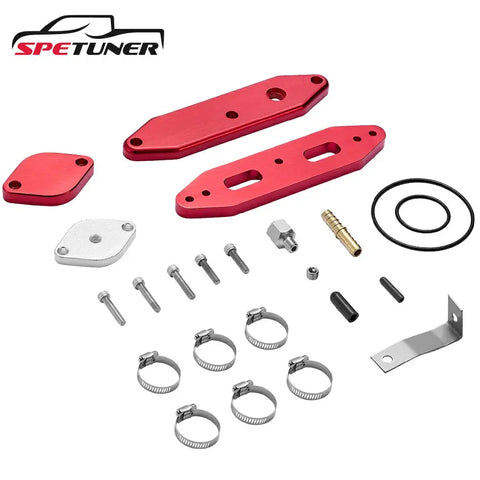
Specifically engineered for the updated cooling system on 2020+ Powerstrokes. This kit removes the restrictive factory EGR components, lowering engine temperatures and preventing soot ingestion. Essential for any high-performance off-road build.
These modifications require proper tuning to function correctly and prevent check engine lights. Always pair EGR system modifications with appropriate ECM tuning.
5. Cold Air Intake
Your engine is basically a giant air pump. The more air it can breathe in, the more power it can produce. The factory air intake system works adequately, but it restricts airflow.
A cold air intake system replaces the factory airbox and filter with a less restrictive design. These systems draw cooler air from outside the engine bay. Cooler air is denser, containing more oxygen molecules. More oxygen means better combustion and more power.
Benefits of a cold air intake include:
- Increased airflow to the turbocharger
- Lower intake air temperatures
- Improved throttle response
- Better fuel economy in some driving conditions
- Enhanced engine sound (if you enjoy turbo whistle)
Installation is usually straightforward and requires basic hand tools. Most systems are designed to fit without cutting or permanent modifications. While a cold air intake alone won't transform your truck's performance, it complements other upgrades effectively.
6. Exhaust Upgrades
The exhaust system on your 6.7 Powerstroke serves multiple purposes. It routes harmful gases away from the cabin, reduces noise, and meets emissions regulations. However, the factory system creates significant backpressure, which forces your engine to work harder.
An upgraded exhaust system typically includes a less restrictive downpipe and a performance exhaust system. These modifications reduce exhaust gas temperature (EGT), which is crucial for engine longevity. Lower EGT means your engine components experience less thermal stress.
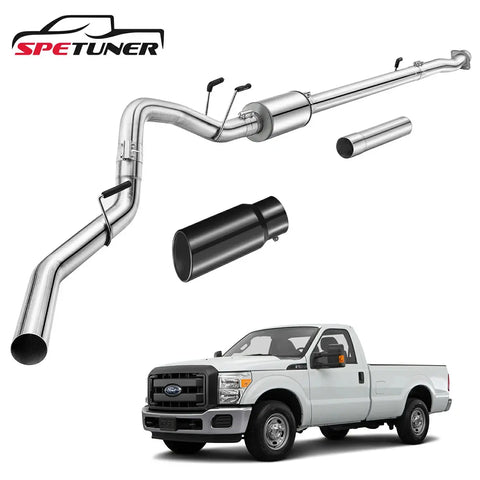
Maximize flow and minimize backpressure with this direct-fit race pipe. Designed for 2020+ models, it replaces the restrictive factory DPF filter, allowing your turbo to spool faster and your engine to run cooler. Available in 4" or 5" diameter.
Benefits of exhaust upgrades include:
- Reduced turbo lag for quicker acceleration
- Lower exhaust gas temperatures
- Increased fuel efficiency (learn more about the 6.7 Powerstroke MPG after DPF Delete).
- Enhanced exhaust note
- Better performance when towing
When choosing an exhaust system, consider your local noise regulations. Some performance exhaust systems are quite loud, which might cause problems in residential areas or lead to tickets. Many manufacturers offer different muffler options to balance performance and sound levels.
7. Comprehensive Delete Kits for Off-Road Applications
Critical Legal Reminder: Complete delete kits that remove DPF, DEF, and EGR systems are ONLY legal for off-road and racing vehicles. Using these kits on street-driven vehicles violates federal EPA regulations and can result in significant fines.
For trucks dedicated to off-road use, competition, or farm work where emissions compliance is not required, comprehensive delete kits offer the most substantial performance improvements. These all-in-one packages typically include:
- DPF (Diesel Particulate Filter) delete pipes
- EGR delete plates and block-off components
- DEF (Diesel Exhaust Fluid) system bypass
- Custom tuning software
- All necessary hardware and gaskets
Finding the Best 6.7 Powerstroke Delete Kit is crucial for upgrading your 6.7 diesel. If you own a 2011-2019 model and want to eliminate all weak points in one go, we recommend you install a complete 6.7 Powerstroke emissions removal kit.
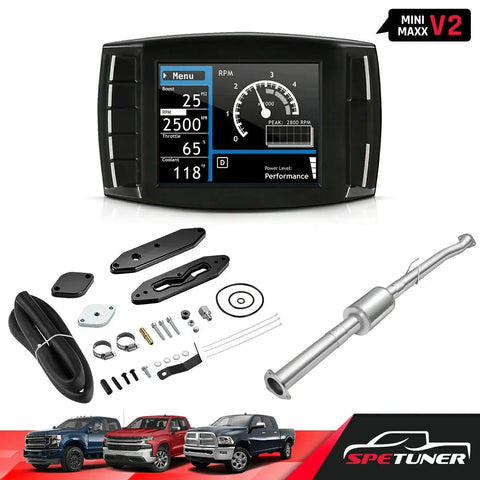
The ultimate solution for complete engine freedom. This bundle includes everything you need: Mini Maxx V2 Tuner, Full EGR Delete Kit, and a 4" or 5" Stainless Steel Race Pipe. Eliminate all factory restrictions in one go for maximum reliability and power gains of up to 150HP.
These comprehensive kits can deliver dramatic improvements for off-road vehicles, including 30-100+ additional horsepower, 3-5 MPG fuel economy gains, elimination of forced regeneration cycles, reduced maintenance costs, and cooler running temperatures.
Special Considerations for Older Models
8. 2011-2014 Turbo Retrofit
If you own a 2011-2014 model 6.7 Powerstroke, your truck came with a different turbocharger than the 2015 and newer models. Ford significantly improved the turbocharger design in 2015. The newer turbo features better materials, improved seals, and more efficient compressor and turbine wheels.
Retrofitting a 2015+ turbocharger to an earlier model truck provides several advantages. The newer turbo spools faster, meaning less turbo lag when you press the accelerator. It also handles higher boost pressure more reliably. Many owners who make this upgrade notice improved throttle response and better power delivery across the RPM range.
This modification requires more mechanical skill than bolt-on upgrades. You'll need to replace the turbocharger itself and possibly update some supporting components. However, for owners of early 6.7 Powerstroke trucks who want maximum performance, this upgrade makes a substantial difference.
The cost is higher than simple bolt-on modifications, but you're essentially giving your truck the benefits of Ford's engineering improvements. If your original turbocharger is showing signs of wear or if you're planning significant power increases, this upgrade makes excellent sense.
Towing-Specific Upgrades
9. Transmission Cooling and Monitoring
The 6.7 Powerstroke engine can produce impressive torque, but all that power flows through your transmission. When towing heavy loads, especially in hilly terrain, your transmission works extremely hard. Heat is the enemy of automatic transmissions. Excessive heat breaks down transmission fluid and damages internal components.
An upgraded transmission cooler is essential for serious towing. The factory transmission cooler often struggles to maintain proper temperatures when towing at or near the truck's maximum capacity. An aftermarket cooler provides much greater cooling capacity.
Installing a transmission temperature gauge is equally important. You need to know what's happening inside your transmission. Most tuning devices and aftermarket gauge packages can display transmission temperature. Pay attention to this number when towing. If transmission temperature exceeds 220°F regularly, you're shortening your transmission's lifespan.
Other towing-related considerations include:
- Transmission fluid and filter changes at shorter intervals
- Upgraded transmission pan with increased fluid capacity
- Ensuring proper gear selection (don't lug the engine in too high a gear)
Many experienced tower operators recommend keeping transmission temperature below 200°F for maximum longevity. If your temperatures run higher than this, slow down, downshift, or install better cooling before continuing to tow heavy loads.
10. CCV Reroute/Delete
The Crankcase Ventilation (CCV) system on your 6.7 Powerstroke releases pressure and blow-by gases from inside the engine. The factory system routes these oil-laden vapors back into the intake, where they can cause buildup in your intercooler and intake manifold over time.
There are two main approaches to addressing CCV issues: reroute systems and delete kits. A CCV reroute redirects the oily vapor away from the intake system, either venting it to the atmosphere or through a catch can filter. A CCV delete completely removes the factory system and replaces it with a simplified setup that prevents oil from entering your intake.
For off-road applications, CCV delete kits offer a permanent solution by eliminating the problematic factory routing. These systems typically include block-off plates, breather filters, and all necessary hardware for installation.
Benefits of 6.7 Powerstroke CCV reroute or delete systems include:
- Eliminated carbon deposits in the intake system
- Cleaner intercooler (better cooling efficiency)
- Reduced oil consumption
- Improved long-term engine reliability
- No more oil coating on intake components
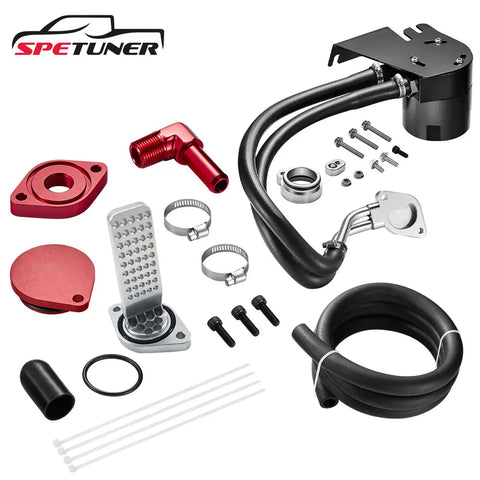
Stop oil vapor from coating your turbo and intercooler. This kit vents crankcase pressure to the atmosphere or a catch can, preventing sludge buildup in your intake manifold. Essential for high-mileage or tuned trucks to maintain efficiency.
For trucks that tow frequently or operate under heavy loads, addressing the CCV system is especially beneficial. Unlike catch cans that require periodic draining, CCV delete systems are maintenance-free once installed. This makes them an attractive option for off-road trucks and work vehicles where reliability is paramount.
For more details, check our full 6.7L Powerstroke CCV Upgrade Guide.
Conclusion
The 6.7 Powerstroke is an impressive diesel engine that delivers strong performance straight from the factory. However, thoughtful upgrades can transform your truck into an even more capable machine while addressing common reliability concerns.
Don't let common reliability issues or restricted factory performance hold your truck back. The upgrades outlined in this guide have helped thousands of 6.7 Powerstroke owners achieve better performance, improved fuel economy, and greater peace of mind.
SPEtuner specializes in complete upgrade solutions for the 6.7 Powerstroke performance. Browse our complete selection of 6.7 Powerstroke delete kits to find the perfect parts for your build.
Have questions about which upgrades are right for your specific needs? Our technical support team is here to help you make informed decisions based on your truck's usage and goals.
Frequently Asked Questions
Q: How do I prevent CP4 failure on my 6.7 Powerstroke?
A: The best defense is installing a CP4 Disaster Prevention Kit, which prevents metal debris from contaminating the fuel system if the pump fails. Additionally, using high-quality fuel additives and strictly adhering to fuel filter change intervals are essential steps to maintain pump lubrication and reliability.
Q: Is the 6.7 Powerstroke plastic charge pipe really a problem?
A: Yes, the factory plastic pipe is a well-known weak link that often bursts under high boost or heavy towing. Upgrading to a heavy-duty aluminum cold-side charge pipe eliminates this risk, ensuring your truck doesn't lose power or enter limp mode when you need it most.
Q: How much horsepower does a 6.7 Powerstroke tuner add?
A: A high-performance Mini Maxx V1 tuner can typically add 100-150 horsepower and up to 300 lb-ft of torque. Gains vary based on the specific tune level—such as street, performance, or towing—and the presence of other modifications like a cold air intake.
Q: What are the best 6.7 Powerstroke upgrades for towing?
A: For heavy hauling, focus on reliability first: an aluminum charge pipe, a dedicated towing tune to manage EGTs, and transmission cooling. Many pros also recommend a CCV Reroute kit to prevent oily vapor from coating the intercooler and reducing cooling efficiency over time.
Q: Should I upgrade my turbo on a 2011-2014 model?
A: Yes, retrofitting the 2015+ GT37 turbocharger is highly recommended for earlier models. The newer turbo design replaces the failure-prone ceramic bearings with more durable steel bearings and provides much better throttle response and high-end power.
Q: What's the most common problem with 6.7 Powerstroke engines?
A: Beyond the fuel pump, EGT sensor failures are extremely common, particularly sensors 12 and 13. These failures can trigger an immediate "pull over safely" warning. Keeping a spare sensor in the glovebox is a common tip shared by experienced Super Duty owners to avoid being stranded.
Q: How much power can the stock transmission handle?
A: The 6R140 TorqShift transmission is quite robust, generally handling up to 600 horsepower and 650 lb-ft of torque reliably. However, when running high-performance tunes, monitoring transmission temperature is vital; keeping it below 220°F is key to preventing internal component wear.
Q: Is deleting emissions equipment worth it for off-road trucks?
A: For competition or farm trucks used strictly off-road, a 6.7 Powerstroke EGR delete and DPF removal can gain 3-5 MPG and eliminate costly regen cycles. Note that these modifications are not legal for street-driven vehicles per federal EPA regulations.
Q: What modifications void my Ford warranty?
A: While the Magnuson-Moss Act prevents a dealer from voiding your whole warranty, they can deny specific claims if an aftermarket part caused the failure. Tuning and emissions deletes are the most common modifications that lead to denied engine and powertrain warranty claims.
Q: How often should I change oil after tuning?
A: On a modified 6.7 Powerstroke, you should shorten oil change intervals to 5,000 miles, or even 3,000-4,000 miles if you tow heavy regularly. Higher power output increases thermal stress, making fresh, high-quality synthetic oil critical for engine longevity.
Q: Can I install these upgrades myself?
A: Basic bolt-ons like air intakes, charge pipes, and tuners are perfect DIY projects. However, more technical jobs like turbo retrofits or full delete kits require advanced mechanical knowledge and proper tools. When in doubt, professional installation is the safest route.
Q: What's the difference between 2011-2014 and 2015+ engines?
A: The 2015+ engines received significant factory upgrades, including a superior turbocharger and a higher-volume fuel pump. While early models are still excellent, retrofitting them with 2015+ style components is the best way to achieve modern levels of reliability and power.

Lars
Diesel Performance Engineer | 15+ Years EXPERIENCE
"Empower Your Beast: Run Cooler, Pull Harder, Last Longer."