Recurring EGR codes, coolant loss, carbon buildup, EGR cooler problems, and repeated repair costs are common reasons Ford diesel owners start researching a Powerstroke EGR delete kit.
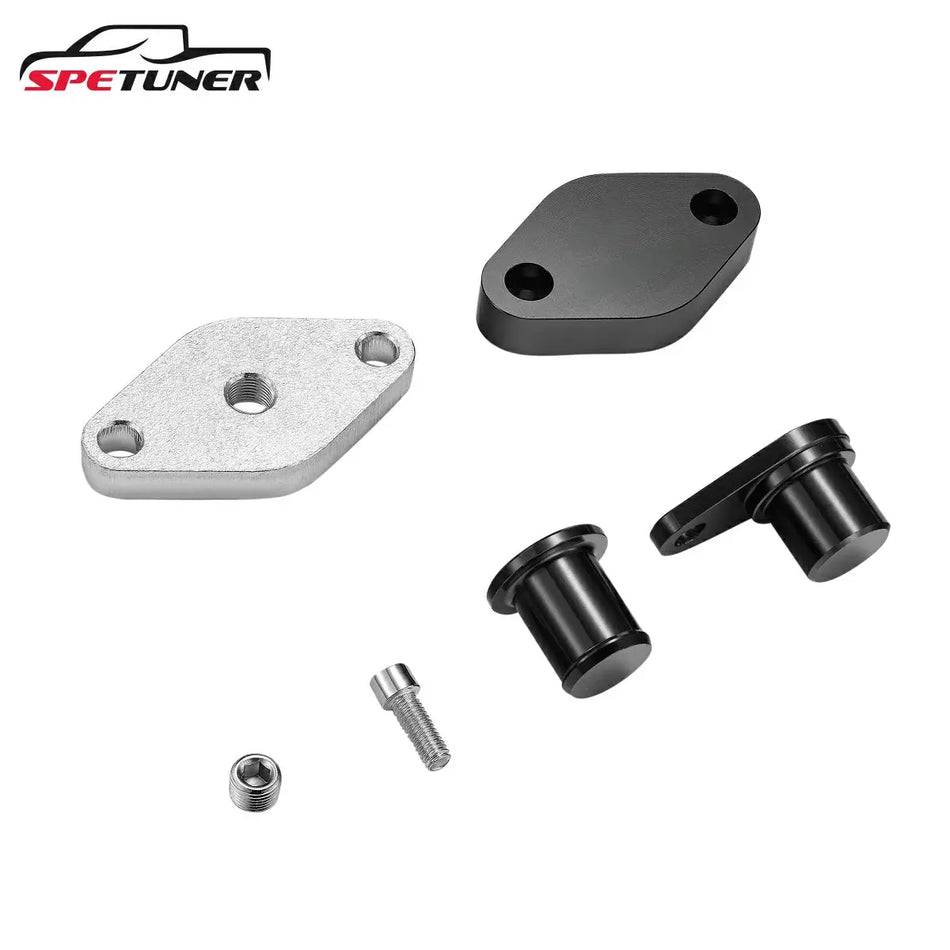
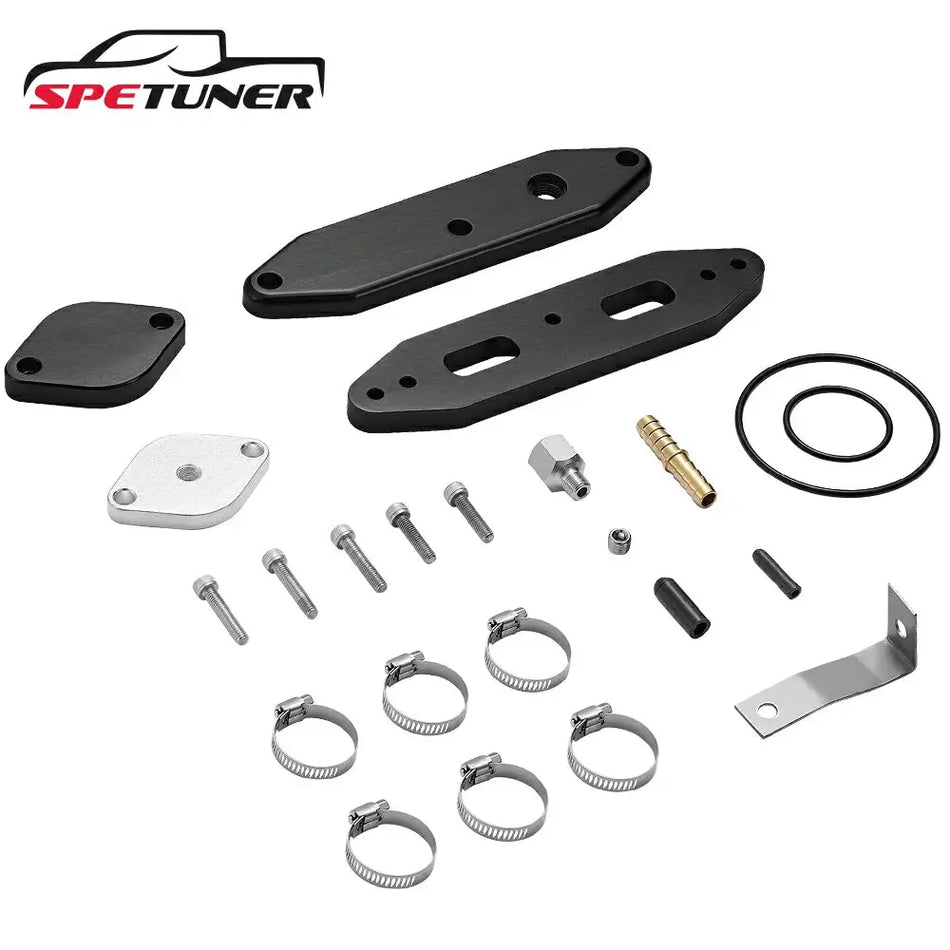
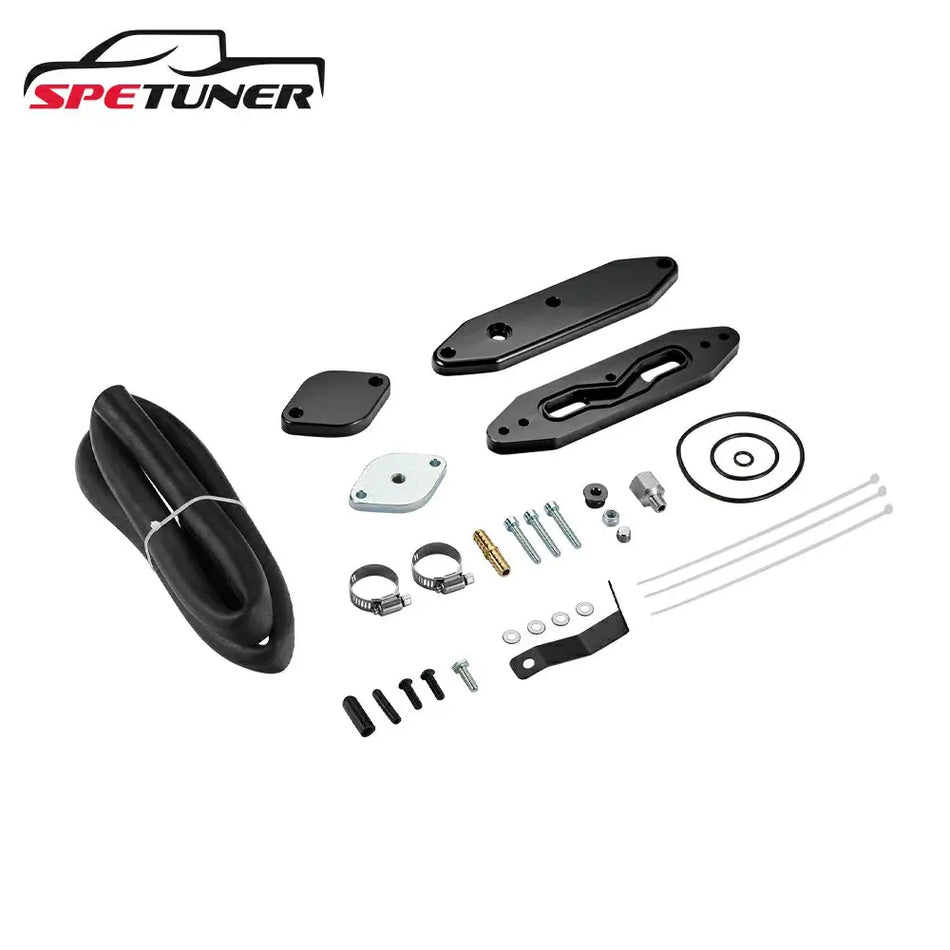
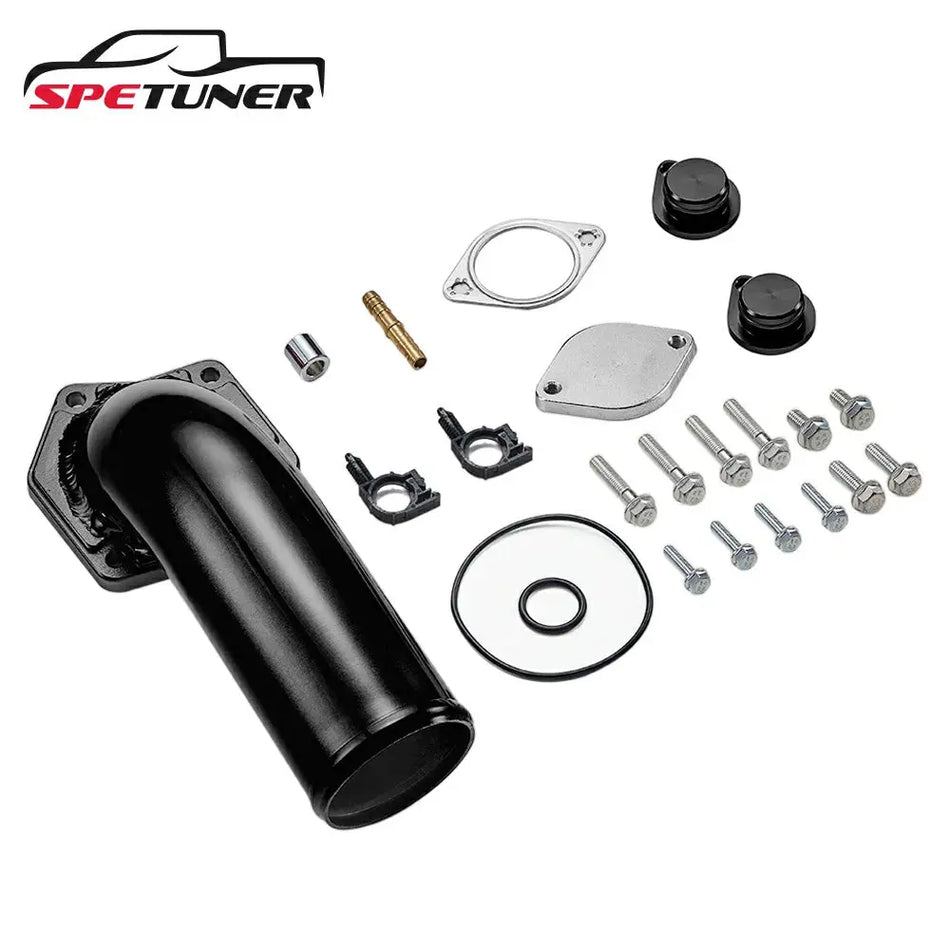
SPEtuner offers EGR delete kits for select 3.0L, 6.0L, 6.4L, and 6.7L Ford Powerstroke applications. Depending on the engine and model year, a kit may include block-off plates, EGR cooler replacement or bypass hardware, coolant-routing components, hoses, fittings, gaskets, O-rings, and other installation hardware.
Which Powerstroke EGR Delete Kit Fits Your Truck?
Start with the engine and model year. A kit that fits one Powerstroke generation should not be assumed to fit another, even when the parts look similar.
Ford changed EGR cooler layouts, coolant connections, mounting points, sensors, and surrounding hardware across different Powerstroke generations. Before ordering, confirm the exact year, engine, chassis configuration, and product fitment.
2018–2021 Ford 3.0L Powerstroke
The 3.0 Powerstroke EGR delete kit used in select Ford F-150 applications has its own EGR layout and supporting hardware. It should not be treated as a smaller version of the 6.0L, 6.4L, or 6.7L Powerstroke.
2003–2007 Ford 6.0L Powerstroke
The 6.0L Powerstroke uses its own EGR cooler and coolant-routing design, so a 6.0 Powerstroke EGR delete kit should be matched specifically to the supported 2003–2007 application.
Owners often start inspecting the EGR cooler after noticing coolant loss, white smoke or steam, overheating, or recurring EGR-related trouble codes. However, those symptoms can also be caused by other cooling-system or engine problems, so diagnose the truck before assuming the EGR cooler is the source.
2008–2010 Ford 6.4L Powerstroke
The 2008–2010 Ford 6.4L Powerstroke uses a different EGR system from the 6.0L and later 6.7L engines, including two EGR cooler sections.
Because of that layout, a 6.4L EGR cooler delete setup needs application-specific hardware for both sections, along with the correct block-off and coolant-routing components.
Do not compare 6.4L kits by price alone. Check the included-parts list before ordering so you know whether the kit contains the hardware required for the complete supported installation.
2011–2019 Ford 6.7L Powerstroke
The 2011–2019 6.7L Powerstroke uses a different EGR configuration from the 6.4L and from 2020+ Super Duty applications.
If you own an F-250, F-350, F-450, or F-550, match the EGR kit to the exact engine and model year. Coolant connections, mounting points, sensors, and supporting hardware can vary across applications.
A product labeled only as “6.7 Powerstroke EGR delete” should not automatically be assumed to fit every 6.7L truck.
2020+ Ford 6.7L Powerstroke
Ford revised parts of the 6.7L EGR system for 2020 and newer Super Duty trucks, including changes to the EGR hardware and coolant connections.
Because of those differences, a 2011–2019 kit should not be used on a 2020, 2021, 2022, 2023, 2024, or 2025 Powerstroke unless the individual product fitment specifically lists that model year.
For newer F-250, F-350, F-450, and F-550 applications, use hardware designed for the supported 2020+ configuration. Also verify whether the product fits pickup, Cab & Chassis, or both.
You can compare application-specific parts for newer trucks in the 2020+ 6.7L Powerstroke collection.
Why Do Powerstroke Owners Research EGR Delete Kits?
Most owners do not start by looking for another modification. Usually, they are trying to understand a recurring problem, reduce repeated downtime, or decide what to do with an older diesel that continues to have EGR-related issues.
Recurring EGR Problems
One EGR valve fault may be a straightforward repair. When EGR-related codes, warnings, or drivability problems keep returning, owners often begin looking at the entire system instead of replacing the same type of component again.
EGR Cooler and Coolant Problems
Coolant loss, white smoke or steam, overheating, and unusual cooling-system pressure can lead an owner to inspect the EGR cooler. Those symptoms are not proof of an EGR cooler failure, so the cooling system and related engine components should be diagnosed before parts are replaced or modified.
Carbon and Soot Buildup
The EGR system routes part of the exhaust stream back into the intake. Over time, soot mixed with oil vapor can leave deposits around the EGR valve and intake tract, especially on older or higher-mileage diesel trucks.
Repair Cost and Downtime
For an older Powerstroke, the bigger concern may be repeated repairs rather than one failed component. Shop time, towing, diagnostic work, replacement parts, and lost use of the truck can add up quickly, particularly for owners who rely on an F-250 or F-350 for towing or work.
What Does a Powerstroke EGR Delete Kit Include?
Kit contents depend on the engine generation and the specific product. A complete Powerstroke EGR delete kit may include engine-specific block-off plates, EGR cooler replacement or bypass hardware, coolant-routing parts, hoses, fittings, gaskets, O-rings, mounting hardware, and related intake or exhaust components.
A 2008–2010 6.4L Powerstroke does not require the same hardware as a 2011–2019 or 2020+ 6.7L Powerstroke. Likewise, the 3.0L Powerstroke uses its own application-specific hardware. Even within the same engine family, model-year and chassis differences can affect what is required.
Always compare the individual product fitment and included-parts list before ordering rather than assuming every EGR kit contains the same hardware.
Do You Need Tuning With a Powerstroke EGR Delete?
Modern Powerstroke engines use electronic controls to monitor EGR operation. When EGR hardware is changed, the engine control system may no longer receive the signals or operating conditions it expects.
Tuning requirements depend on the engine, model year, existing calibration, current hardware, and the specific modification being performed. Do not choose a tuner simply because it is advertised for Ford diesel trucks. Confirm that the tuning solution supports your exact engine, model year, hardware configuration, and intended application.
If you are comparing EGR hardware with other emissions-related components, the broader diesel EGR delete kit collection can help you compare applications across different truck platforms.
Installing a Powerstroke EGR Delete Kit
Powerstroke EGR delete installation can range from relatively straightforward hardware work to a much more involved job depending on the engine.
Some installations require draining coolant, removing components around the EGR cooler, rerouting coolant lines, replacing gaskets or O-rings, and working around intake, turbo, sensor, or exhaust components.
Before installation, confirm the engine and model year, compare every part with the product list, review the coolant-routing procedure, prepare the correct tools, inspect nearby hoses and seals, and read the installation instructions for your specific application.
After assembly, check all coolant, intake, and exhaust connections before refilling and operating the truck. If you are not comfortable working around the intake, turbocharger, cooling system, or EGR components, professional installation may be the better option.
These products are intended for off-road, competition, or export-only applications where permitted. Confirm the rules that apply to your vehicle and intended use before modifying emissions-related equipment.
Why Shop SPEtuner Powerstroke EGR Delete Kits?
SPEtuner organizes Powerstroke EGR delete kits by engine generation and model-year range instead of treating every Ford diesel as the same application.
You can compare EGR hardware for select 3.0L, 6.0L, 6.4L, 2011–2019 6.7L, and 2020+ 6.7L Powerstroke applications, then verify the exact fitment and included components on the individual product page.
SPEtuner also carries related Ford Powerstroke performance parts and provides engine-specific installation resources to help owners plan the rest of the build around the correct truck platform.
Powerstroke EGR Delete Kit FAQs
Does a Powerstroke EGR delete require tuning?
Tuning requirements depend on the engine, model year, existing calibration, and hardware configuration. Because the engine control system monitors EGR operation, confirm the tuning requirements for your exact application before changing the EGR hardware.
Is it worth deleting the EGR on a 6.7 Powerstroke?
It depends on the truck, its condition, how it is used, and the rules that apply to it. Owners often research a 6.7 Powerstroke EGR delete after dealing with repeated EGR faults, EGR cooler problems, carbon buildup, or high repair costs.
Is EGR delete good for a diesel?
There is no single answer for every diesel truck. Changing the EGR system can affect emissions equipment, cooling, engine controls, and how the truck runs. The result depends on the engine, vehicle condition, tuning, supporting parts, and how the truck is used.
Which EGR delete kit is best for a 6.7 Powerstroke?
The best kit is the one that fits your 6.7L Powerstroke model year and EGR setup. The 2011–2019 and 2020+ 6.7L Powerstroke use different hardware. They should not be treated as the same application.