Seeing the same EGR code again? Losing coolant without an obvious external leak? Or dealing with carbon and soot buildup around the intake and EGR system?
Those are common reasons diesel truck owners start researching the EGR system and comparing replacement, bypass, and delete hardware.
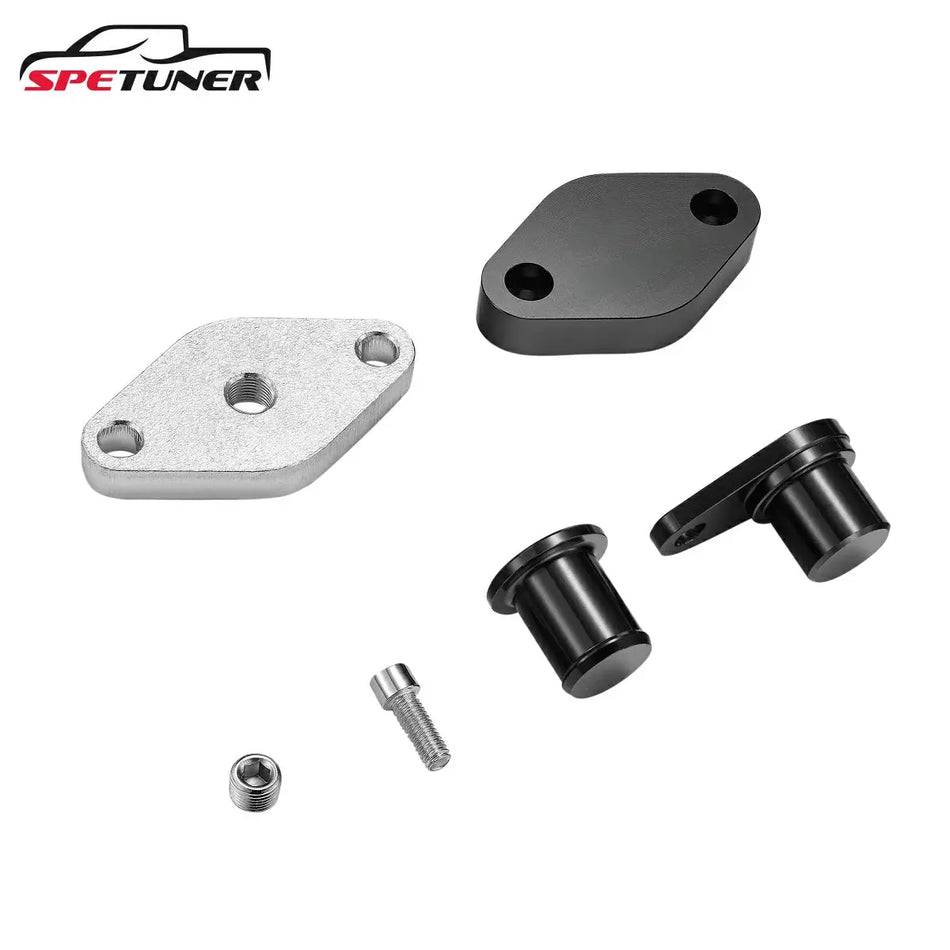
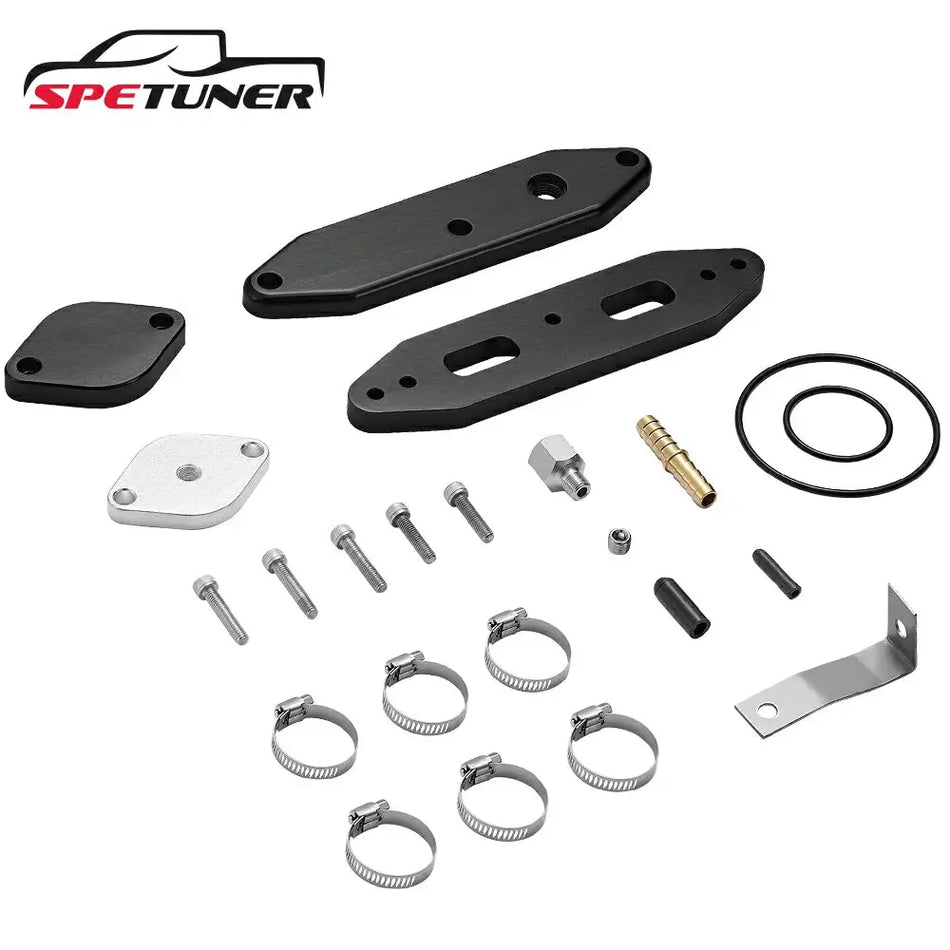
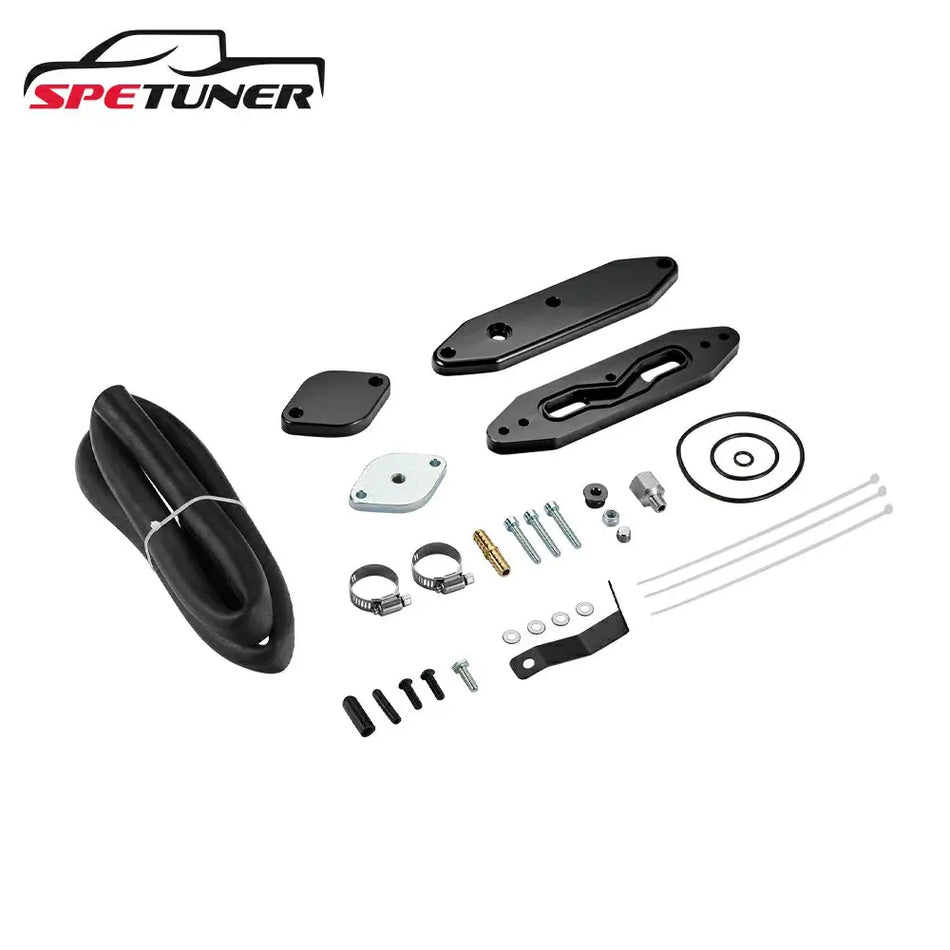
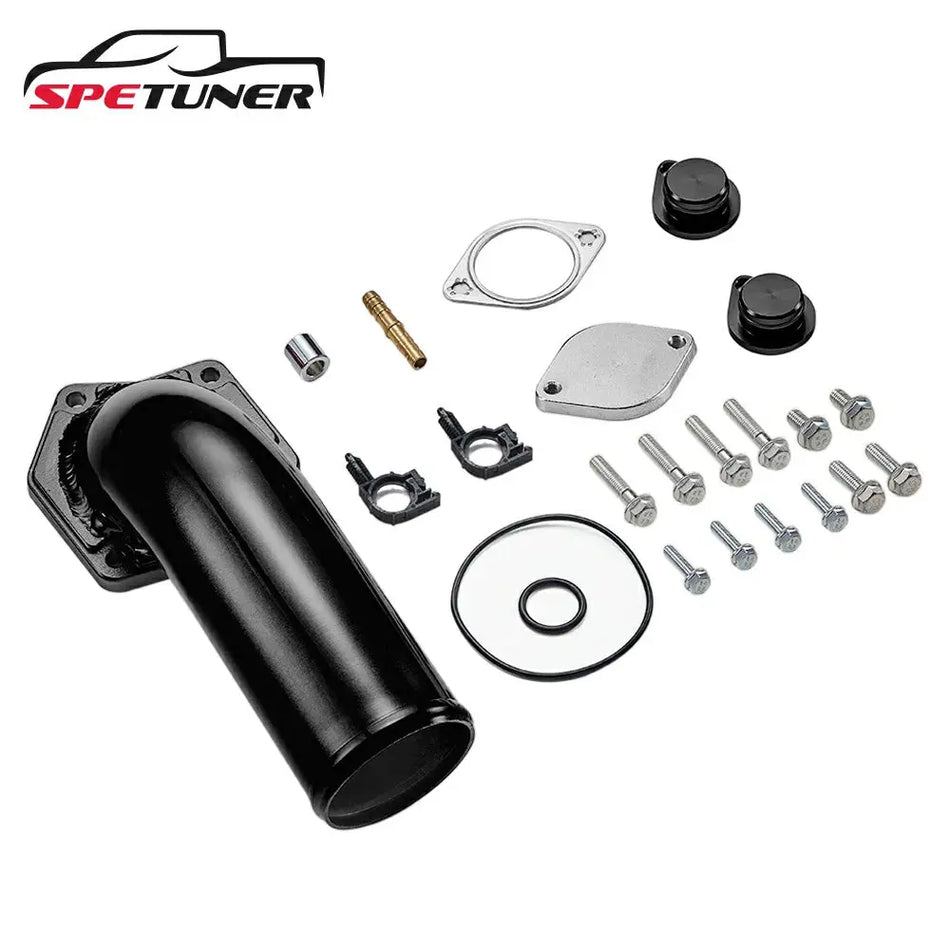
SPEtuner offers EGR delete kits for select Ford Powerstroke, RAM Cummins, GM Duramax, Nissan Cummins, and EcoDiesel applications. Depending on the engine and model year, kits may include EGR valve or cooler block-off components, coolant-routing hardware, pipes, hoses, fittings, gaskets, and other application-specific parts.
Find the Right EGR Delete Kit for Your Diesel Truck
The factory exhaust gas recirculation (EGR) system routes a controlled amount of exhaust gas back into the engine intake as part of the vehicle's emissions strategy. Because the design varies from one diesel engine to another, the EGR valve, EGR cooler, coolant routing, sensors, intake connections, and mounting points can all be different.
That is why choosing by truck brand alone is not enough.
Ford Powerstroke EGR Delete Kits
Ford Powerstroke diesel engines use several different EGR layouts across generations.
SPEtuner carries Powerstroke EGR delete hardware for applications including:
- 2003–2007 Ford 6.0L Powerstroke
- 2008–2010 Ford 6.4L Powerstroke
- 2011–2019 Ford 6.7L Powerstroke
- 2020+ Ford 6.7L Powerstroke
- Select 3.0L Powerstroke F-150 applications
A 2003–2007 EGR delete kit for the 6.0L Powerstroke should not be treated as interchangeable with a 2008–2010 Ford 6.4L kit or a later 6.7L Powerstroke kit.
The same applies to newer Ford F-250, F-350, F-450, and F-550 trucks. Always match the Ford Powerstroke EGR delete kit to the engine generation rather than simply selecting by the Ford badge.
RAM Cummins EGR Delete Kits
The Cummins EGR system also changed across different 6.7L RAM generations.
Available applications include select:
- 2007–2009 6.7L Cummins
- 2010–2012 6.7L Cummins
- 2013–2018 6.7L Cummins
- 2019+ 6.7L Cummins
- Cummins Cab & Chassis applications
If you drive a RAM 2500 or 3500 pickup, do not assume its Cummins EGR delete kit will automatically fit a 3500, 4500, or 5500 Cab & Chassis truck. Chassis-cab models can use different emissions hardware, routing, and calibration.
GM Duramax EGR Delete Kits
For GM and Chevy Duramax trucks, the engine code is particularly important.
SPEtuner carries Duramax EGR delete hardware for select generations including:
- LLY Duramax
- LBZ Duramax
- LMM Duramax
- LML Duramax
- L5P Duramax
- Select smaller Duramax diesel applications
An LLY EGR delete, LBZ EGR delete, LMM EGR delete, and LML EGR delete use different engine-specific components. A part designed for one GM Duramax generation should not be assumed to fit another simply because both trucks use a 6.6L diesel engine.
What Is Included in an EGR Delete Kit?
There is no single universal EGR delete kit. The required components depend on how the original EGR system is designed.
Depending on the application, a kit may contain EGR valve block-off plates, EGR cooler replacement or bypass components, coolant-routing hardware, intake pipes, hoses, clamps, fittings, gaskets, mounting hardware, or other engine-specific components.
That difference matters when comparing prices. One product may be a basic hardware kit, while another may include additional pipes, hoses, or cooling-system components. Compare the actual contents rather than assuming two kits with similar names are equivalent.
Why Do Diesel Owners Start Researching the EGR System?
Most diesel owners do not start searching for EGR hardware because they simply want another modification. Usually the truck starts giving them a reason to investigate.
Recurring EGR Codes
A check-engine light or EGR-related fault that repeatedly returns after cleaning, diagnosis, or replacement parts is one of the most common reasons owners begin researching the system more closely.
Carbon and Soot Buildup
Because the EGR system introduces exhaust gas back into the intake stream, soot deposits can accumulate in EGR and intake components over time.
The amount of buildup varies with engine design, mileage, duty cycle, maintenance history, operating temperature, driving conditions, and other factors.
Unexplained Coolant Loss
If coolant keeps disappearing but there is no obvious puddle under the truck, the EGR cooler may be one component worth inspecting.
However, do not assume every coolant-loss problem is caused by the EGR cooler. Hoses, radiators, water pumps, reservoirs, head gaskets, and other cooling-system components can produce similar symptoms.
Reduced Power or Poor Throttle Response
Certain EGR faults can appear alongside a check-engine light, rough running, poor throttle response, or reduced-power operation.
But low power does not automatically mean the EGR system is the root cause. Turbocharger problems, boost leaks, fuel-system issues, exhaust restrictions, sensor failures, and other engine problems can create similar symptoms.
Repeated Repair Costs
For many truck owners, the frustration is not one repair. It is the cycle of diagnosis, cleaning, replacement parts, another warning light, and more downtime.
That is often when owners move from searching for EGR valve symptoms or EGR cooler problems to comparing EGR bypass hardware and complete EGR delete kits.
What Should You Check Before Ordering an EGR Delete Kit?
Engine and engine code: A 6.7L Powerstroke and a 6.7L Cummins share a displacement number, but virtually nothing about their EGR hardware is interchangeable. Duramax owners should also confirm whether the truck uses an LLY, LBZ, LMM, LML, L5P, or another engine generation.
Model year: Changes can occur within the same engine family. Never assume a kit listed for one generation automatically fits every later truck using the same engine name.
Pickup or Cab & Chassis: This is especially important on RAM Cummins applications and certain commercial truck configurations.
Kit contents: Check exactly what is supplied. Some products include coolant-routing or intake components, while others include only the hardware required for a specific portion of the EGR system.
Existing mechanical problems: Changing EGR hardware will not repair unrelated turbocharger, injector, cooling-system, head-gasket, DPF, wiring, or sensor faults. Diagnose existing problems before assuming one modification will solve every symptom.
Intended vehicle use: Emissions-system modifications can be restricted by applicable laws and regulations. Verify the requirements for your vehicle, location, and intended use before modifying factory emissions equipment. Products intended for off-road, competition, or export applications should be used only where permitted.
EGR Delete Kit FAQs
What does an EGR delete kit do?
An EGR delete kit contains application-specific hardware used to modify or remove portions of the factory exhaust gas recirculation system. The exact components and required installation procedure vary significantly by engine and model year.
Is an EGR delete good for a diesel engine?
Diesel owners commonly research EGR modification after experiencing carbon buildup, EGR cooler problems, recurring fault codes, or repeated EGR-system repairs. The result depends on the engine, condition of the truck, calibration, installation, and intended use. It should not be treated as a repair for unrelated mechanical problems.
What are common symptoms of an EGR problem?
Possible symptoms include recurring EGR-related trouble codes, a check-engine light, excessive soot accumulation, rough running, poor throttle response, reduced power, coolant loss, or abnormal exhaust vapor.
None of those symptoms confirms an EGR failure by itself. Similar symptoms can come from turbocharger, cooling-system, fuel-system, DPF, sensor, wiring, or internal engine problems.
Do I need a tune with an EGR delete kit?
Yes. Removing the EGR triggers check engine codes — P0401, P0402, P0404, or P0405, depending on your platform. A tune tells the ECU to stop monitoring EGR feedback and adjusts fueling for the cleaner intake charge after the delete. Running without a tune means a permanent CEL and risk of limp mode. See whether you need a tune after EGR delete for a full breakdown.
What's the difference between an EGR delete and an EGR bypass?
An EGR bypass routes coolant or airflow around the EGR cooler without fully removing the valve — it's a partial fix. An EGR delete physically removes the valve and cooler and blocks off the ports with a plate. SPEtuner EGR kits are full delete kits — CNC-machined block-off plates and all — for a clean, permanent removal rather than a workaround.
Will an EGR delete help with towing?
A: Yes. Under tow load, the EGR recirculates hot exhaust gases into the intake at exactly the moment your engine needs clean, cool air most. Removing it means better airflow under sustained load, translating to more consistent throttle response and improved fuel efficiency while towing.