Quick Answer:
A fully deleted and tuned L5P Duramax typically produces between 550 to 600 horsepower and over 1,250 lb-ft of torque on a standard "Street" or "Performance" tune. With a maximum effort "Race" tune and proper transmission tuning, the L5P can exceed 640+ horsepower at the crank using the stock turbo and fuel system.
Important emissions notice: DPF, EGR, DEF, and emissions-related delete products are intended for closed-course competition, off-road, or race-use applications only where permitted by law. They are not legal for use on public roads or emissions-controlled vehicles in many areas. Always check and follow all local, state, provincial, and federal emissions regulations before modifying your truck.
The 2017-2023 L5P Duramax is one of the strongest factory diesel platforms GM has ever released. Stock, it is rated at 445 horsepower and 910 lb-ft of torque at the crank. For a heavy-duty pickup straight off the lot, that is already serious power.
But if you hang around diesel shops, tow rigs, dyno days, or Duramax groups long enough, you will hear the same question over and over:
How much power does an L5P actually make once it is deleted and tuned?
The short version: with the right tune and supporting setup, the L5P wakes up hard. The stock turbo, Denso fuel system, and bottom end have enough headroom to deliver big gains without immediately needing a turbo or injector upgrade.
- 445 HP Factory crank horsepower
- 380-400Typical stock wheel horsepower
- 540-600Common deleted and tuned crank HP
- 650+Possible race-tune crank HP
Stock L5P Duramax Horsepower: Crank HP vs Wheel HP
Before talking about delete and tune gains, it is important to separate crank horsepower from wheel horsepower.
- Crank horsepower: The engine output measured before drivetrain loss. GM rates the L5P at 445 HP and 910 lb-ft.
- Wheel horsepower: The power that actually reaches the tires on a chassis dyno. A stock L5P commonly puts down around 380-400 WHP.
That difference comes from drivetrain loss through the Allison transmission, transfer case, driveshafts, axles, tires, and rotating mass. So when someone says a deleted L5P makes "600 horsepower," always ask whether they mean crank HP or wheel HP.
Real-world rule of thumb: A 600 crank-HP L5P may show roughly 500-540 WHP depending on dyno type, tire size, gear selection, temperature, altitude, and drivetrain configuration.
How Much HP Does a Tuned and Deleted L5P Make?
To appreciate the gains, we must first look at the baseline. The Stock L5P Duramax is rated from the factory at 445 HP and 910 lb-ft of torque (Crank Horsepower). However, due to drivetrain loss through the heavy-duty Allison transmission, a stock truck typically puts down roughly 380-400 HP at the wheels on a dyno.
Once the restrictive hardware is removed, the real magic happens in the software. The factory Denso fuel system and stock turbocharger have significant headroom, allowing for massive gains without needing mechanical upgrades.
Below is the breakdown of L5P tune gains you can expect from professional custom tuning (included in our unlock bundles). These numbers represent the added power over stock.
Note: These are estimated Crank Horsepower numbers.
| Tune Level | Additional HP | Total Est. HP | Torque Gains | Application |
|---|---|---|---|---|
| 1. Optimized Stock | +20 HP | ~465 HP | +40 lb-ft | Heavy Towing |
| 2. Tow | +60 HP | ~505 HP | +100 lb-ft | Light Towing / Daily |
| 3. Street (Eco) | +100 HP | ~545 HP | +180 lb-ft | Best MPG / Daily |
| 4. Performance | +150 HP | ~595 HP | +240 lb-ft | Spirited Driving |
| 5. Max Effort (Race) | +200 HP | ~645 HP | +350+ lb-ft | Track Use Only |
Benefits of Deleting L5P Duramax
L5P Duramax stock versus tuned horsepower is just a number on a sheet of paper. The driving experience changes in other ways:
- Improved L5P Delete MPG: Without the L5P DPF regen cycles dumping raw diesel into the exhaust to burn off soot, and with a more efficient air/fuel mixture, most L5P owners report a 3-5 MPG increase on the highway.
- Engine Longevity: By deleting the EGR, you stop feeding abrasive soot back into your cylinders. Your oil stays golden and clean for thousands of miles, reducing engine wear.
- Throttle Response: The turbo lag is significantly reduced. The truck feels lighter and more responsive to pedal input.
- Sound: A 4" or 5" straight pipe allows you to finally hear the V8 diesel rumble.
What Does "Deleted and Tuned" Mean on an L5P?
When Duramax diesel owners talk about an L5P delete kit, they are usually referring to the removal or bypassing of factory emissions-related components for off-road or competition use. The common "Big 3" are the EGR, DPF, and DEF/SCR systems.
At SPEtuner, we provide a comprehensive range of L5P mods to address every bottleneck:
1. EGR Delete
The EGR system routes exhaust gas back into the intake to reduce combustion temperatures and emissions. In performance applications, removing EGR flow can help keep intake air cleaner and reduce soot buildup inside the intake tract.
2. DPF Delete
The DPF traps soot in the exhaust stream. It also creates exhaust restriction and requires regeneration cycles. For competition builds, replacing the restrictive exhaust section with a race-use exhaust setup can reduce backpressure and help the turbo breathe more freely.
3. DEF / SCR System
The DEF/SCR system injects diesel exhaust fluid into the exhaust stream to reduce NOx emissions. In off-road race applications where emissions equipment is removed, the system must be properly addressed in the tuning and hardware configuration.
Important: Deleting emissions equipment without proper legal authorization can violate emissions laws and void the factory warranty. These modifications should only be considered for vehicles used in legal off-road or closed-course competition environments.
Why the L5P Responds So Well to Tuning
The L5P is not just an older Duramax with a new badge. GM upgraded several major areas compared with previous generations, including airflow, fueling, strength, and cooling capacity.
- Strong factory powerplant: The L5P has a stout bottom end and improved rotating assembly compared with earlier platforms.
- Capable Denso fuel system: The factory fuel system has enough headroom for strong street and performance tunes.
- Responsive VGT turbo: The stock turbo can support impressive power before an upgrade becomes necessary.
- Modern calibration potential: Once the E41 ECM is unlocked, custom tuning can dramatically improve fueling, boost control, torque management, and throttle response.
The E41 ECM Unlock: The Step You Cannot Skip
The biggest difference between the L5P and older Duramax platforms is the E41 ECM. GM locked the L5P computer with advanced encryption, which means you cannot treat it like an old LBZ or LML and simply plug in a basic handheld tuner.
For a 2017+ L5P, tuning requires one of the following:
- Physical ECM unlock service: The ECM is removed and unlocked by a specialist.
- Pre-unlocked ECM exchange: Your stock ECM is swapped for an already unlocked unit.
- Compatible tuning device and credits: The tuner, credits, and calibration files must match the vehicle and ECM strategy.
If your goal is reliable power, do not cut corners here. The quality of the unlock process and the tune matters just as much as the exhaust hardware. For the basic preparation path, review the L5P factory ECM unlock instructions before choosing a tune package.
Do You Need TCM Tuning on a Deleted L5P?
For mild tow and street tunes, many trucks live comfortably on the factory transmission calibration. But once you start pushing into +150 HP or hotter files, TCM tuning becomes a smart move.
A good TCM tune can help improve:
- Shift timing
- Line pressure
- Torque converter behavior
- Clutch holding power
- Overall drivability under higher torque
The Allison is tough, but torque is what kills transmissions. A deleted and tuned L5P can easily make enough torque to expose weak clutches, poor shift strategy, or abuse from heavy throttle towing.
What Supporting Mods Help a Deleted L5P?
A basic delete and tune can make great power, but the best-running trucks usually have supporting parts that improve airflow, temperature control, and long-term reliability. For a broader planning view, compare common options in the L5P Duramax performance upgrades guide.
CCV Reroute Kit
The factory crankcase ventilation system can route oily vapor back into the intake path. An L5P CCV reroute kit helps keep the turbo inlet and intercooler cleaner by redirecting crankcase vapor away from the intake system.
High-Flow Downpipe
The factory downpipe is restrictive. Upgrading to a high-flow L5P downpipe can help the turbo spool faster and reduce exhaust gas temperatures.
Up-Pipes
Performance Duramax L5P up-pipe improves exhaust flow into the turbo. They are especially useful for owners chasing better response, lower EGTs, or higher performance tune levels.
Performance Muffler
A straight pipe is loud. For many daily-driven trucks, a high-flow muffler gives you better exhaust flow while cutting down on highway drone and cab noise.
Shop All L5P Duramax Performance Parts
How Much Torque Does a Deleted L5P Make?
Horsepower gets the attention, but torque is what makes a tuned L5P feel like a different truck. Depending on the tune, a deleted L5P can produce around 1,050-1,300 lb-ft of crank torque.
| Setup | Approx. Crank Torque | Driving Feel |
|---|---|---|
| Stock L5P | 910 lb-ft | Strong factory towing power |
| Tow Tune | ~1,000-1,050 lb-ft | Better low-end pull and throttle response |
| Street Tune | ~1,080-1,150 lb-ft | Much stronger daily-driving torque |
| Performance Tune | ~1,150-1,250 lb-ft | Hard acceleration and aggressive street feel |
| Race Tune | ~1,250-1,300+ lb-ft | Competition-only power level |
Will a Deleted L5P Get Better MPG?
Many owners report an improvement of around 2-5 MPG after a proper off-road delete and tune, especially during highway driving. The biggest reasons are reduced exhaust restriction, no DPF regeneration cycles, and optimized fueling.
That said, MPG gains depend heavily on:
- Tire size and weight
- Lift height
- Driving style
- Tune level
- Gear ratio
- Towing weight
- Highway vs city use
If you install a hot tune and drive everywhere with your foot in it, do not expect miracle fuel economy. The truck may be more efficient, but power is still paid for with fuel.
How Much Does It Cost to Delete and Tune an L5P?
The L5P is more expensive to modify than older Duramax generations because of the locked E41 ECM. A complete off-road race-use setup typically includes tuning hardware, ECM unlock, exhaust components, EGR components, and connector protection.
Below is a realistic L5P delete cost breakdown project using premium parts from SPEtuner. We believe in transparency - here is exactly what you are paying for.
| Component | Estimated Cost | Why It Matters |
|---|---|---|
| L5P Tuner and ECM Unlock | ~$2,699 | The required foundation for custom tuning on the encrypted E41 ECM. |
| DPF Delete Exhaust Kit | ~$298-$1,099 | Race-use exhaust flow upgrade; options vary by pipe size, muffler, and configuration. |
| EGR Delete Kit | ~$159+ | Addresses the EGR system for off-road or competition builds. |
| CAN BUS Plug Kit | ~$140 | Protects open connectors from moisture, corrosion, and electrical issues. |
| CCV, Downpipe, Up-Pipes | ~$219-$249 each | Optional supporting mods for cleaner airflow, better response, and lower EGTs. |
Most owners should budget around $3,300-$3,800 for a basic all-in-one off-road delete and tune setup. A more complete performance build with CCV reroute, downpipe, and up-pipes can land closer to $4,000-$4,500+.
Build Your L5P the Right Way
Looking for L5P Duramax parts for an off-road or competition build? Browse tuning bundles, exhaust kits, EGR components, CAN BUS plugs, and airflow upgrades in one place.
View L5P Duramax Parts CollectionRecommended L5P Delete and Performance Parts
If you are planning a complete L5P build, the key is compatibility. The tuner, ECM unlock, exhaust, EGR components, and CAN BUS protection need to work together as a system.

DPF/EGR/DEF Delete 2017-2023 L5P 6.6L Duramax All-in-One Kit
L5P delete kit
$3,166.99 - $3,667.99
View L5P All-in-One Kit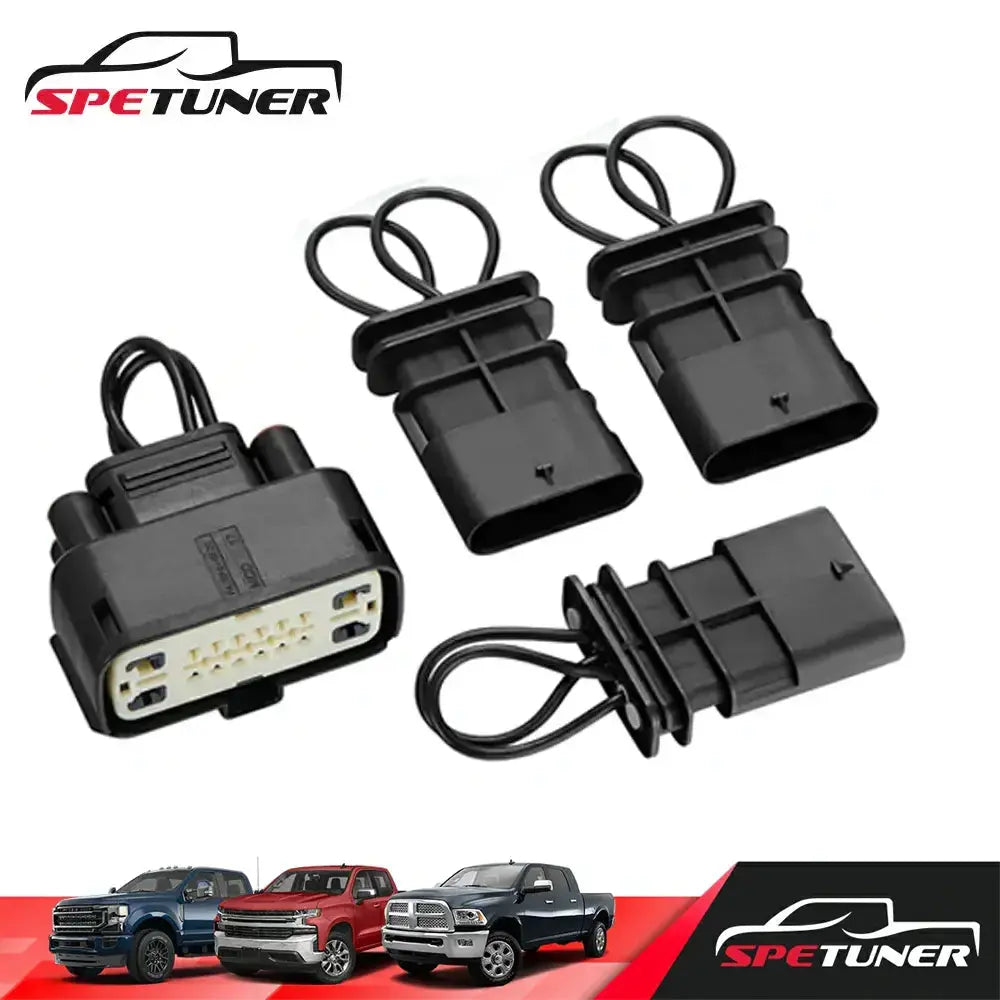
CAN BUS Plug Kit For 2017-2024 L5P 6.6 Duramax Chevy GMC
L5P CAN BUS Plug Kit
$140.00
View L5P CAN BUS Plug Kit
Option B: What Does a "Full Performance" L5P Build Cost?
Includes: Everything in Option A + CCV Reroute + Downpipe + Up-Pipe
This is for the owner who wants to maximize longevity and airflow efficiency.
- Essential Total: ~$3,300 - $3,800
- Optional Upgrades: ~$720
- TOTAL: ~$4,000 - $4,520 USD
Is Deleting and Tuning an L5P Worth It?
Short answer: it depends. Use a L5P delete decision guide to weigh the truck's use case, legal status, warranty, tuning quality, and drivetrain risk.
For a legal off-road or competition truck, a deleted and tuned L5P can be a massive upgrade. You get stronger throttle response, more torque, lower exhaust restriction, better drivability, and a truck that feels far more alive than stock.
But it is not a casual modification. It can void the factory warranty, create legal issues if used on public roads, and put more stress on the transmission and drivetrain if the tune is too aggressive.
If you want the best balance, a conservative tow or street tune with proper supporting parts is usually the smartest route. If you want max-effort race power, be ready to think about TCM tuning, EGT monitoring, drivetrain stress, and long-term maintenance.
How Much Power Can You Expect?
A deleted and tuned L5P Duramax usually lands in the 540-600 crank horsepower range on common street and performance tunes. With a max-effort race tune, the stock turbo and fuel system can support roughly 620-650+ crank horsepower under the right conditions.
For most owners, the best L5P setup is not the biggest number on the dyno sheet. It is the tune that matches how the truck is actually used: towing, daily driving, highway cruising, or closed-course competition.
Frequently Asked Questions
Q1: How much HP does a deleted and tuned L5P make?
A deleted and tuned L5P Duramax typically makes around 540-600 crank horsepower on a street or performance tune. A max-effort race tune can reach around 620-650+ crank horsepower with the stock turbo and fuel system.
Q2: How much wheel horsepower does a deleted L5P make?
Most deleted and tuned L5P trucks make around 460-540 WHP depending on tune level, dyno type, drivetrain loss, tires, altitude, and vehicle setup. Hotter race files may exceed that range.
Q3: What is the stock L5P Duramax horsepower?
The factory-rated L5P Duramax makes 445 horsepower and 910 lb-ft of torque at the crank. On a chassis dyno, many stock trucks show around 380-400 WHP.
Q4: How much torque does a deleted L5P have?
A deleted and tuned L5P can make roughly 1,050-1,300 lb-ft of crank torque, depending on the tune. Race tunes usually produce the highest torque but also create the most drivetrain stress.
Q5: Can the stock L5P turbo handle 600 HP?
Yes, the stock L5P turbo can support around 600 crank horsepower with proper tuning. For consistent power beyond that range, upgraded turbo and fueling components may become necessary.
Q6: Do I need upgraded injectors for a deleted L5P?
Not for most street, tow, or performance tunes. The factory Denso fuel system is capable enough for many stock-turbo builds. Upgraded injectors are generally considered when chasing higher power beyond typical stock-fuel-system limits.
Q7: Can the Allison transmission handle a deleted and tuned L5P?
For mild tow and street tunes, the Allison transmission is generally strong. For +150 HP or max-effort race tunes, TCM tuning is recommended to improve shift strategy, line pressure, and clutch holding power.
Q8: What is the safest daily tune for an L5P?
A tow or street tune is usually the safest daily option. These tunes improve throttle response and torque without pushing the turbo, fuel system, and transmission as hard as a race tune.
Q9: Will deleting an L5P improve MPG?
Many owners report around 2-5 MPG improvement, especially on the highway. Actual results depend on tune level, tire size, driving style, load, gearing, and road conditions.
Q10: Will deleting my L5P void the warranty?
Yes. Removing or disabling emissions systems and flashing the ECM can void the factory powertrain warranty. These modifications are intended only for legal off-road, race, or closed-course competition use.
Q11: Can I tune an L5P without unlocking the ECM?
No. The 2017+ L5P uses an encrypted E41 ECM. The ECM must be unlocked or exchanged for an unlocked unit before custom tuning can be installed.
Q12: What is the best delete kit for a 2019 Duramax L5P?
For a complete off-road build, most owners choose an all-in-one setup that includes the ECM unlock, tuning device, exhaust components, EGR components, and CAN BUS protection. Compatibility matters more than buying random parts separately. Check this L5P Duramax delete kit comparison guide to compare package contents before ordering parts.

Lars
Diesel Performance Engineer | 15+ Years EXPERIENCE
"Empower Your Beast: Run Cooler, Pull Harder, Last Longer."