TL;DR:
- Location: The Ford 6.7 Crankcase Ventilation (CCV) filter is located on top of the driver’s side valve cover, secured by several bolts.
- Replacement Cost: Dealerships typically charge $300-$500 for parts and labor. DIY replacement costs about $80-$130 for the filter itself and takes under an hour.
- The Ultimate Fix: Tired of buying $100 filters every 50k miles? Installing a CCV Reroute Kit permanently eliminates the filter, stops oil sludge in your intake, and is the best long-term upgrade for 2011-2023+ models.
Introduction: Why Replacing the Ford 6.7 CCV Filter is So Important
If you're driving a vehicle equipped with the Ford 6.7L Powerstroke engine, maintaining engine health is crucial. The Crankcase Ventilation (CCV) system plays a vital role in diesel engines, keeping gases and emissions under control while helping the engine run smoothly. Regular CCV filter replacement is key to keeping your intake free from harmful oil sludge buildup.
Failing to replace the Ford 6.7 CCV filter on time results in accumulated contaminants damaging internal engine parts, leading to sluggish performance and higher maintenance costs. Whether you drive a 2013 early model or a 2018 Alumiduty, changing this filter extends your engine’s lifespan, stabilizes power output, and reduces oil consumption.

Exact CCV Filter Location on the 6.7 Powerstroke
A very common question among truck owners is regarding the exact CCV filter location. On the Ford 6.7L Powerstroke, the crankcase ventilation filter assembly is bolted directly to the top of the driver’s side valve cover.
Once you open the hood, look to the passenger compartment side of the engine bay (your right side when facing the truck). It is a black, rectangular plastic box with hoses routing toward the air intake. You will need to remove the oil fill tube bracket and loosen a series of 8mm bolts to access it.
6.7 Powerstroke CCV Filter Replacement Cost: DIY vs. Dealer
When it comes to the 6.7 PowerStroke CCV filter replacement cost, you have two choices. Taking your truck to a Ford dealership or a diesel shop will typically run you between $300 and $500, factoring in the marked-up OEM parts and 1 to 2 hours of labor.
However, doing it yourself is highly cost-effective. A high-quality replacement CCV filter box usually costs between $80 and $130. If you have basic hand tools and an hour of free time, the DIY route will save you hundreds of dollars.
Stop Buying Expensive Factory CCV Filters.
Why spend $130 every few years on a filter that just traps oil vapor inside your intake anyway? Our SPETUNER CCV Reroute Kits eliminate the restrictive factory filter entirely. Vent the pressure safely, keep your turbo and intercooler free of oil sludge, and never buy a replacement filter again.
Shop 6.7L CCV Reroute Kits →When Should You Replace the CCV Filter?
Timely replacement of your crankcase ventilation filter is essential. Over time, it becomes clogged with oil vapors, limiting airflow. Here are the signs that your 2011-2023 filter needs attention:
1. Decreased Power and Sluggish Acceleration
When restricted, it affects the intake system pressure. If the engine feels sluggish, check the CCV.
2. Increased Oil Consumption
If the filter fails, excess oil vapor bypasses the trap and enters the intake manifold. If you're burning oil with no visible leaks, the CCV is the prime suspect.
3. Diagnostic Trouble Codes (Check Engine Light)
Modern Ford 6.7 engines monitor crankcase pressure. A clogged filter will throw a trouble code (such as P04DB) and illuminate the check engine light.

Preparing for the Ford 6.7 Crankcase Ventilation Filter Replacement
Tools & Materials You’ll Need
- 8mm Socket and Extension Bar: To remove the bolts securing the filter to the valve cover.
- Torque Wrench: Crucial for re-tightening the plastic housing without cracking it.
- Clean Rags: To wipe the mating surfaces on the valve cover.
- New OEM-Compatible Filter OR a Reroute Kit.
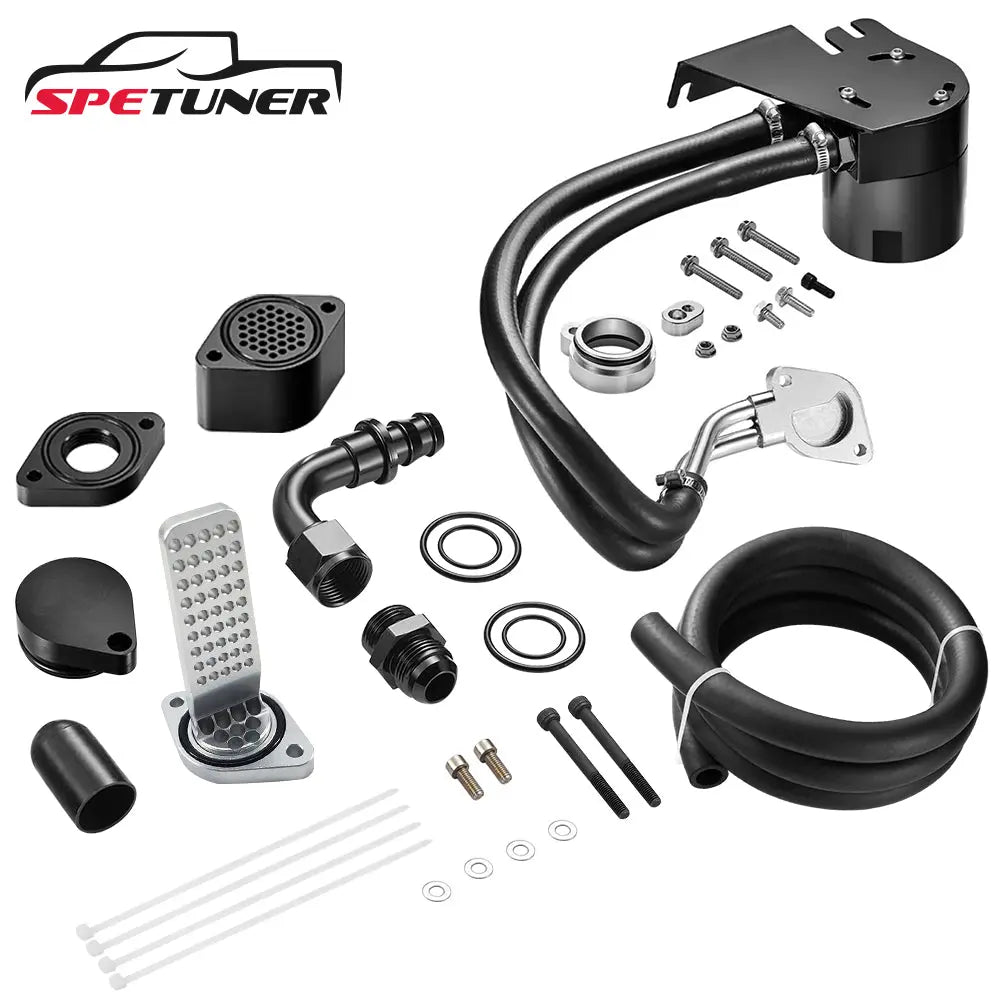
Eliminate the restrictive factory filter entirely. Vent the pressure safely, keep your turbo and intercooler free of oil sludge, and never buy a replacement filter again.
Ford 6.7 CCV Filter Replacement Steps
Step 1: Locate and Prep
Open the hood, ensure the engine is cool, and locate the CCV filter box on the driver’s side valve cover. Remove the oil dipstick tube bracket bolt to give yourself clearance.
Step 2: Disconnect the Hoses
Pinch and release the locking tabs on the CCV hoses routing to the intake. Carefully pull them off the filter housing.
Step 3: Unbolt the Old CCV Filter
Using your 8mm socket, loosen all the bolts around the perimeter of the CCV box. Lift the old filter assembly up and away. Have a rag ready to catch dripping oil.
Step 4: Install the New Filter or Reroute Block
Clean the mating surface on the valve cover. Seat the new CCV filter (or your new billet reroute block) ensuring the O-rings are aligned. Hand-thread the 8mm bolts, then torque them down snugly (do not over-tighten the plastic). Reconnect your hoses and the dipstick bracket.

Push Your Powerstroke Further.
With your crankcase breathing properly again, it's time to unlock the real power of your 6.7L engine. Explore our full catalog of Ford Powerstroke performance upgrades, including high-flow intakes, exhaust systems, and complete delete tuning packages designed for maximum off-road reliability.
Shop All 6.7 Powerstroke Parts →Common Mistakes and How to Avoid Them
-
Using Cheap Non-OEM Filters: Low-quality filters warp under heat and leak oil. Always use OEM or high-quality aluminum reroute kits.
2. Skipping the Cleaning Step: If you don't wipe the valve cover mating surface, the new O-ring will not seal correctly.
3. Ignoring the P04DB Code: If you do a reroute, make sure you use the provided sensor fooler or update your tuning to prevent the check engine light.
FAQs
Q1: Why is Ford 6.7 CCV filter replacement important?
A1: Replacing the CCV filter is crucial for maintaining engine efficiency, reducing oil sludge buildup, preventing engine damage, and ensuring that your vehicle complies with environmental regulations.
Q2: How often should I replace the CCV filter in my Ford 6.7?
A2: It’s recommended to replace the Ford 6.7 CCV filter every 30,000 to 50,000 miles, depending on driving conditions. However, regular checks for symptoms of clogging can help determine when it needs replacement.
Q3: What are the signs that my Ford 6.7 CCV filter needs replacing?
A3: Symptoms include decreased engine performance, increased oil consumption, abnormal exhaust smoke, or engine diagnostic codes. These signs indicate the CCV filter is clogged and needs replacing.
Q4: Can I replace the Ford 6.7 CCV filter myself?
A4: Yes, replacing the Ford 6.7 CCV filter is a manageable task with the right tools and instructions. Following a step-by-step guide ensures the process goes smoothly, but professional help is available if needed.
Q5: What tools do I need to replace the CCV filter?
A5: Essential tools include a socket set, torque wrench, pliers, oil catch pan, and cleaning materials. A new CCV filter and replacement seals are also necessary for the process.
Q6: How can I prevent issues with my Ford 6.7 CCV system?
A6: Regular maintenance, including checking for leaks, cleaning the system, and replacing the CCV filter, helps prevent issues. Ensure all connections are tight and replace any worn seals to avoid engine problems.
Q7: What’s the difference between CCV filter replacement and a CCV reroute modification?
A7: CCV filter replacement is a maintenance task, while a CCV reroute modification involves changing the system’s design, such as redirecting crankcase gases. Both help maintain engine performance but for different purposes.
Q8: Are aftermarket CCV filters safe to use for my Ford 6.7?
A8: Yes, as long as you choose high-quality aftermarket filters that meet OEM specifications. Products like SPETUNER's Powerstroke CCV Reroute Kit are designed to provide optimal performance and system cleanliness.
Q9: Can failing to replace the CCV filter damage my engine?
A9: Yes, neglecting to replace a clogged or faulty CCV filter can lead to oil leaks, increased engine sludge, and poor engine performance, potentially causing long-term damage if not addressed.
Q10: How do I know if the new CCV filter is installed correctly?
A10: After installation, check for secure connections, listen for unusual engine sounds, and inspect the exhaust for abnormal smoke. Running the engine for a few minutes will help confirm everything is working properly.

Lars
Diesel Performance Engineer | 15+ Years EXPERIENCE
"Empower Your Beast: Run Cooler, Pull Harder, Last Longer."