Quick Answer: When Should You Replace an EGR Valve?
Replace the EGR valve when testing confirms that it is stuck, its actuator or position sensor has failed, its sealing surface is damaged, or the same fault returns after proper cleaning.
Use a seven-step check before buying parts: scan the codes, review freeze-frame data, inspect the wiring, check for carbon, compare commanded and actual valve position, inspect the EGR cooler, and rule out boost leaks.
Key reminder: Do not replace an EGR valve because of mileage or one trouble code alone. A blocked passage, bad sensor, cooler leak, or charge-air leak can cause similar symptoms.
I do not order an EGR valve just because a scanner shows an EGR code. On diesel trucks, the code often tells you which system is unhappy, not which exact part has failed. I first compare the commanded valve position with the actual position. Then I check the cooler, wiring, intake ports, and boost system.
This matters because an EGR valve can be expensive and hard to reach. Replacing a good valve will not fix a cracked charge pipe, blocked intake passage, failed temperature sensor, or leaking EGR cooler. A short diagnostic session can save hours of work and a second repair bill.

What Does an EGR Valve Do?
The Exhaust Gas Recirculation valve controls how much exhaust gas enters the intake. The engine computer opens and closes the valve based on load, engine temperature, speed, and other sensor data.
Diesel EGR systems deal with soot, heat, and oil vapor. Over time, that mix can form a hard layer inside the valve and intake passages. The valve may move slowly, stick open, stick closed, or give the computer a position reading that does not match the command.
Common Symptoms of a Bad EGR Valve
No single symptom proves the valve is bad. Look for a pattern and confirm it with scan data.
| Symptom | What It May Mean | What to Check First |
|---|---|---|
| Rough idle or stalling | The valve may be stuck open and allowing exhaust gas into the intake at idle. | Commanded valve position, actual position, intake leaks, and carbon around the valve seat. |
| Slow throttle response | The valve may be stuck, or the EGR passage may be restricted. | EGR flow data, boost pressure, MAP sensor readings, and charge-air leaks. |
| Black smoke | The engine may not be getting the airflow it expects. | Boost pipes, turbo operation, injectors, air filter, sensors, and EGR flow. |
| Check engine light | The computer has detected a flow, position, circuit, or temperature fault. | Read all stored, pending, and permanent codes before clearing anything. |
| Poor fuel economy | The engine may be running with incorrect airflow or spending more time in regeneration. | Compare current fuel use with the truck's normal baseline and inspect live data. |
| Reduced-power or limp mode | The computer may be limiting power because the EGR system is outside its expected range. | Freeze-frame data, EGR position, boost pressure, exhaust temperature, and related codes. |
| Coolant loss or white steam | This points more toward the EGR cooler or cooling system than the valve. | Coolant level, pressure loss, EGR cooler leaks, and exhaust steam. |
Can You Keep Driving With a Bad EGR Valve?
A truck with a mild EGR flow code may still drive, but I would not tow a heavy trailer or take a long trip until the cause is known. The fault can affect throttle response, regeneration, exhaust temperature, and reduced-power behavior.
Stop Driving and Inspect the Truck If You Notice:
- Engine overheating
- Fast coolant loss
- Heavy white steam from the exhaust
- Severe shaking or repeated stalling
- A red temperature or low-coolant warning
- Reduced power that makes the truck unsafe in traffic
These signs may point to an EGR cooler or cooling-system failure. Continuing to tow can turn a smaller repair into major engine damage.
Should You Clean or Replace the EGR Valve?
The main question is not how dirty the valve looks. The main question is whether the mechanical and electronic parts still work.
| Condition | Best Next Step | Reason |
|---|---|---|
| Light or moderate carbon buildup | Clean and retest | The valve may work normally once the seat and passage are clear. |
| Valve moves during an active test but responds slowly | Clean, inspect, and retest | Carbon may be slowing the valve without an electrical failure. |
| Valve does not respond to an active command | Test power, ground, and wiring; then replace it if the circuit is good | A failed actuator cannot be repaired with cleaner. |
| Actual position does not match commanded position | Check wiring and replace the valve if the sensor is faulty | The internal position sensor may have failed. |
| Valve sticks again soon after cleaning | Replace the valve and inspect the intake system | Heavy wear or deep deposits may make cleaning a short-term fix. |
| Cracked housing, damaged seat, or warped sealing surface | Replace | The valve cannot seal correctly. |
| Coolant loss, steam, or overheating | Diagnose the EGR cooler first | The valve may not be the failed part. |
Owner's note: A valve that is dark with soot is not automatically bad. Most used diesel EGR valves look dirty. I replace one only after the movement, sensor signal, sealing surface, or repeat fault shows that cleaning will not solve the problem.
Seven Steps to Diagnose an EGR Valve Before Replacement
- Read every trouble code. Record stored, pending, and permanent codes. Do not clear them before checking the freeze-frame data.
- Review the freeze-frame data. Check engine speed, load, coolant temperature, vehicle speed, boost, and EGR command when the code appeared.
- Inspect the connector and wiring. Look for broken locks, loose pins, rubbed wires, oil contamination, heat damage, and corrosion.
- Inspect the valve and EGR passages. Carbon may block the passage even when the electronic valve still works.
- Run an active scan-tool test. Command the valve open and closed. Watch whether the actual position follows the command.
- Check the EGR cooler and cooling system. Pressure loss, coolant smell, steam, or overheating may point to the cooler.
- Rule out boost and airflow faults. Check charge pipes, boots, clamps, the MAP sensor, the MAF sensor, and turbo response.
When I diagnose a power-loss complaint, I watch the data under the same conditions that caused the fault. A valve may pass a quick idle test but fail under load. Freeze-frame data tells you where to repeat the test.

Common EGR Trouble Codes
Code wording can vary by manufacturer. The following generic code families are common starting points, not final diagnoses.
| Code | General Meaning | Do Not Assume |
|---|---|---|
| P0400 | General EGR flow fault | Do not assume the valve itself has failed. |
| P0401 | Insufficient EGR flow | A blocked passage, sensor issue, or cooler restriction may be the cause. |
| P0402 | Excessive EGR flow | The valve may be stuck open, but sensor data must be checked. |
| P0403 | EGR control-circuit fault | Inspect the wiring, connector, power, and ground before buying a valve. |
| P0404 | EGR range or performance fault | Compare commanded and actual valve position. |
| P0405 or P0406 | EGR position-sensor signal low or high | A damaged wire can produce the same result as a failed internal sensor. |
EGR Valve vs EGR Cooler
The EGR valve controls flow. The EGR cooler removes heat from the exhaust gas before it enters the intake. They work together, but they fail in different ways.
| More Likely EGR Valve | More Likely EGR Cooler |
|---|---|
| Rough idle | Unexplained coolant loss |
| Stalling | White exhaust steam |
| Incorrect valve-position data | Sweet coolant smell |
| Flow or control-circuit codes | Cooling-system pressure loss |
| Valve fails an active command test | Overheating under load |
Do not keep replacing EGR valves on a truck that is losing coolant. A cooler leak needs a separate pressure and cooling-system diagnosis.
How Often Should an EGR Valve Be Replaced?
There is no fixed EGR valve replacement interval for every diesel truck. Replace it when testing confirms a fault.
Short trips, long idle time, low-load driving, oil vapor, poor maintenance, and repeated interrupted regenerations can increase soot buildup. Highway use may slow that buildup, but it does not guarantee that the actuator or position sensor will last forever.
Inspect the EGR system when:
- An EGR code returns after being cleared
- The truck develops a rough idle or reduced-power problem
- Fuel economy changes without another clear cause
- The intake is removed for major service
- The truck has coolant loss, steam, or overheating
How Much Does EGR Valve Replacement Cost?
The final price depends on valve access, engine layout, labor rate, part quality, and whether the intake or EGR cooler also needs service.
The following figures are broad budgeting estimates, not repair quotes:
| Repair Item | Typical Planning Range | What Changes the Price |
|---|---|---|
| Diagnostic testing | $100–$250 | Scan-tool time, electrical testing, smoke testing, and cooling-system tests. |
| EGR valve only | $100–$700 for the part | Truck year, engine, OEM or aftermarket brand, and whether the actuator is included. |
| Valve replacement at a shop | About $400–$1,600 total | Access, labor hours, gaskets, coolant, intake removal, and relearn procedures. |
| Valve plus cooler or intake service | $1,200–$3,500 or more | Cooler replacement, intake cleaning, broken hardware, coolant service, and added labor. |
Ask the shop to separate the diagnostic charge, valve cost, labor, gaskets, coolant, and related repairs. That makes it easier to see whether the estimate is for a confirmed valve failure or a full EGR-system repair.
Can You Replace an EGR Valve Yourself?
Some EGR valves sit near the top of the engine and are reasonable DIY jobs. Others are buried behind intake parts, coolant lines, brackets, or the EGR cooler.
DIY Replacement May Make Sense If:
- You have a scan tool that can read live EGR data
- The valve is easy to reach
- You have the correct torque values and service steps
- You can drain and refill coolant correctly if required
- You can perform any needed relearn or code-clearing process
Use a Shop If:
- The truck is overheating or losing coolant
- The valve is buried under major intake parts
- Bolts are rusted or likely to break
- The fault is intermittent and needs data logging
- You cannot confirm whether the valve, cooler, sensor, or wiring is at fault
Before removing the valve, let the engine cool. Disconnect power when required by the service procedure. Keep debris out of the intake, use new seals, and do not force an electronic valve by hand unless the manufacturer allows it.
How to Choose a Replacement EGR Valve
- Match the exact year and engine. Similar-looking valves may use different connectors or position ranges.
- Check the complete part number. Do not order by engine family alone.
- Use new gaskets and seals. Reusing a damaged seal can create an exhaust or coolant leak.
- Check whether programming is needed. Some platforms require a relearn or adaptation.
- Avoid the cheapest unknown valve. Poor actuator control or sensor accuracy can bring the same code back.
- Inspect nearby parts while access is open. Check the connector, cooler hoses, intake passage, and mounting surface.
Should You Repair the EGR System or Use an EGR Delete?
For a street-driven truck, repairing the failed EGR component is normally the proper path. It keeps the emissions system in its intended form and avoids inspection, registration, warranty, and legal problems.
A blocker plate and a full EGR removal are not the same modification. Owners comparing non-road options can review this EGR delete versus blocker plate guide.
On the L5P Duramax, the EGR, DPF, DEF, sensors, engine controls, and reduced-power logic work as one system. Review the pros and cons of an L5P EGR and DPF delete before treating one EGR fault as a reason to change the entire emissions system.
Compliance Note
Emissions-removal hardware is intended only for off-road, race, competition, or export vehicles where its use is permitted. Removing or disabling emissions equipment on a street-driven vehicle may violate federal, state, provincial, or local law. Check the rules that apply to your vehicle before making any modification.
Explore Diesel EGR Delete Kits
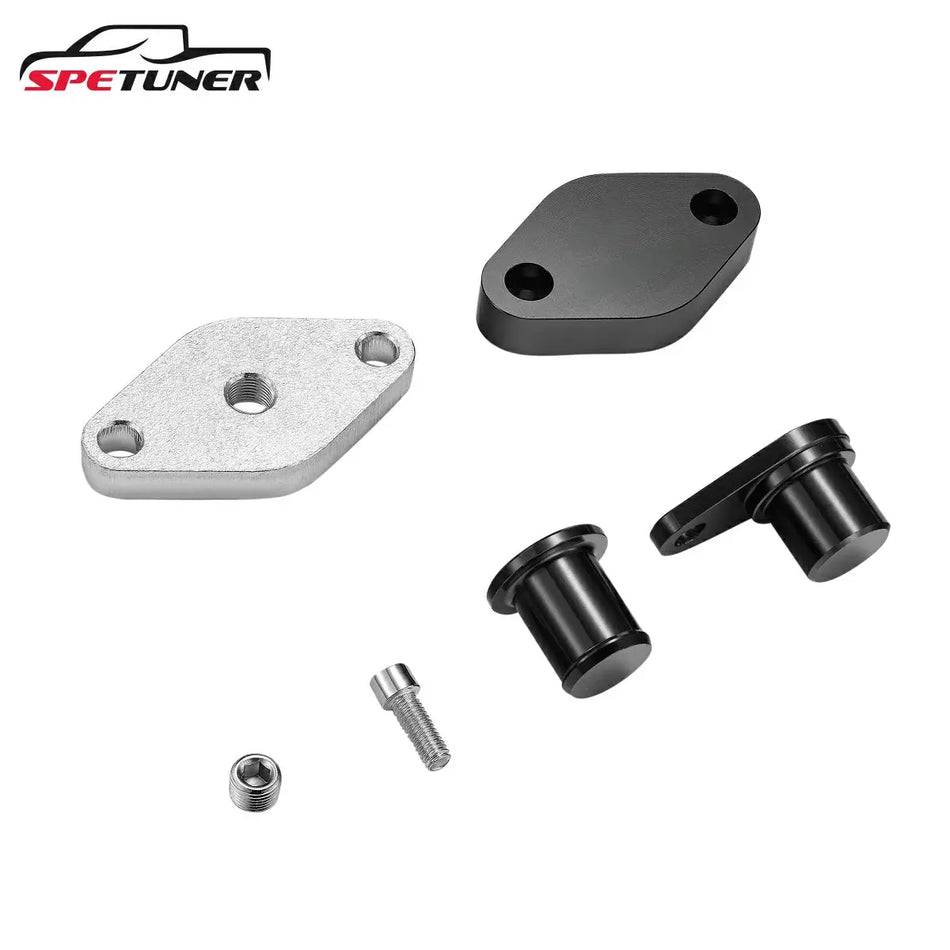
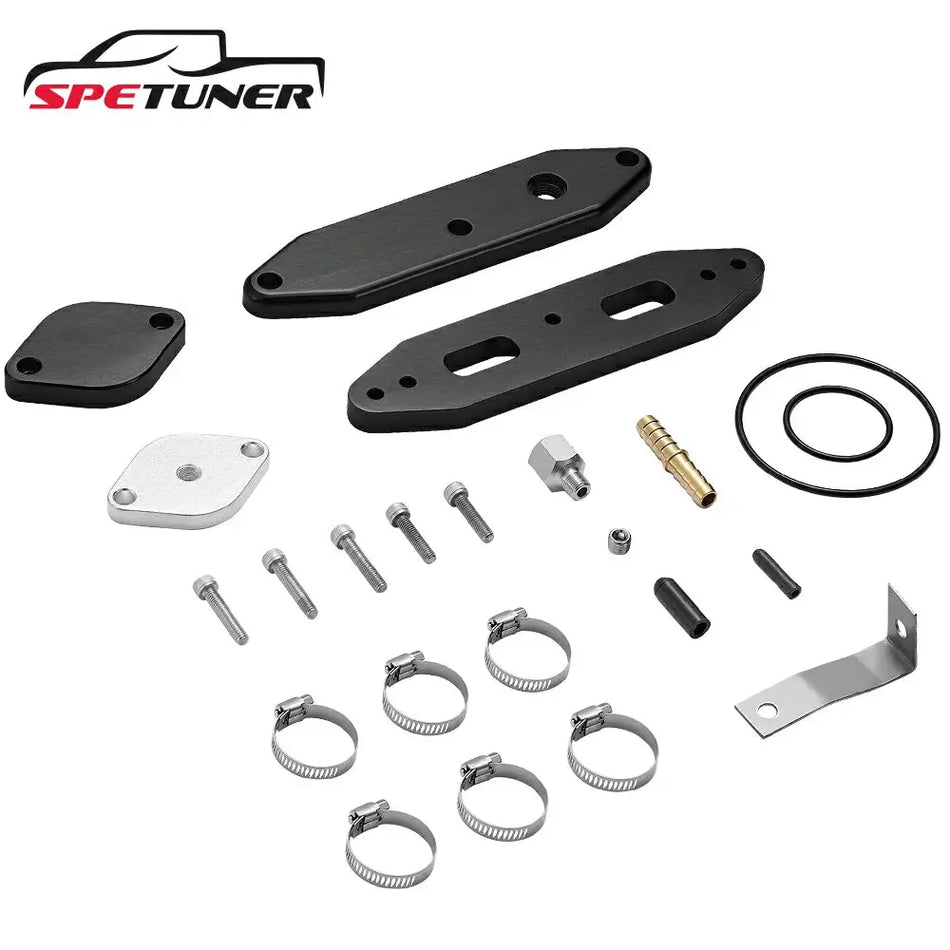
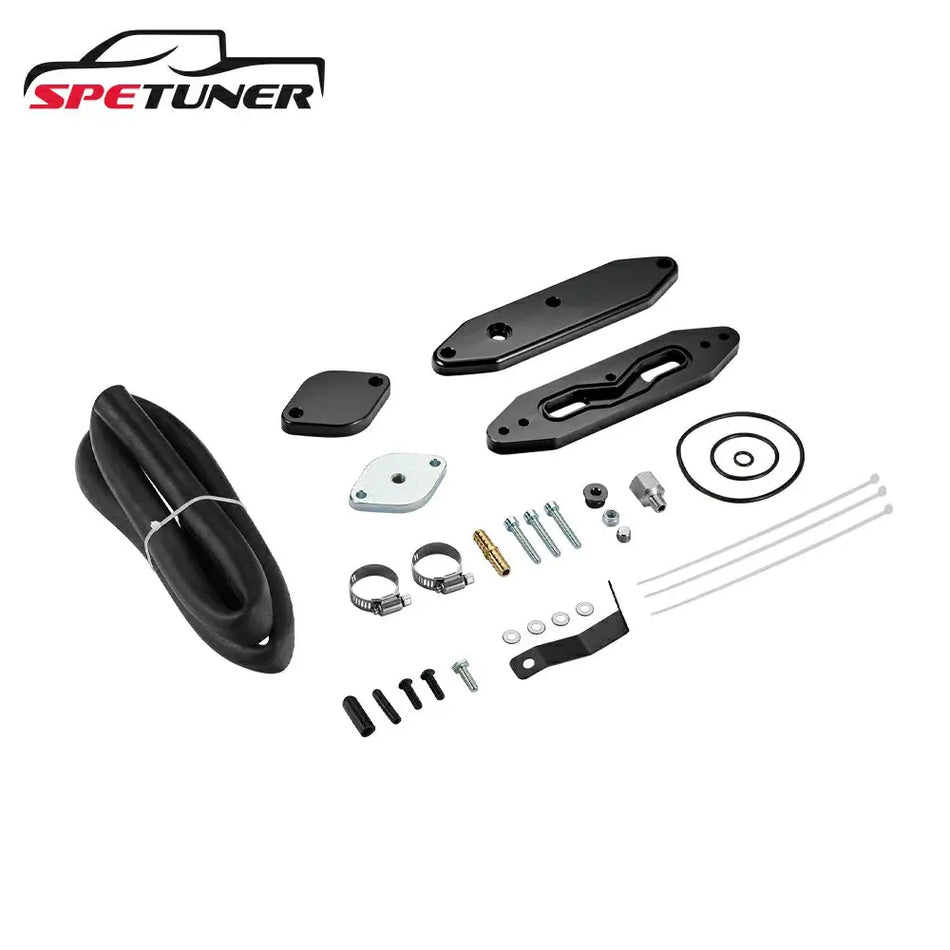
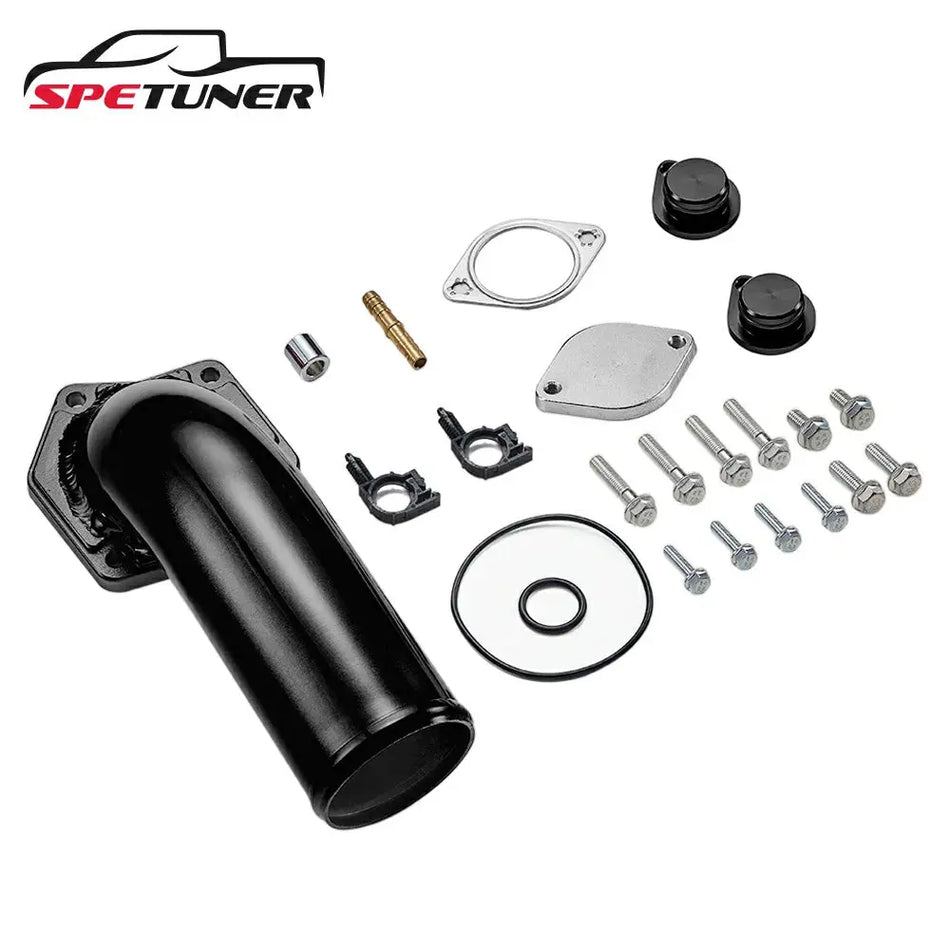
Building an off-road, race, competition, or export-use diesel truck? Explore vehicle-specific EGR delete kits for Powerstroke, Duramax, and Cummins applications. Match the kit to your exact engine, model year, and truck platform before ordering.
Will EGR Repair or Removal Improve MPG and Power?
If a failed valve is causing poor airflow or rough combustion, replacing it may restore lost throttle response and fuel economy. That is a repair, not a performance upgrade. A healthy stock truck should return to its normal baseline.
For non-road builds, fuel savings depend on tune quality, duty cycle, gearing, tire size, idle time, towing weight, and engine health. Read this guide on whether an EGR delete increases MPG before using fuel savings to justify the work.
Power claims also need context. Hardware removal alone does not fix weak injectors, a boost leak, a worn turbo, bad compression, or poor calibration. The article on DPF and EGR delete power gains explains the difference between reduced restriction and a complete performance setup.
Platform-Specific Off-Road Installation Resources
Diesel EGR layouts change by engine generation. A generic video may skip coolant routing, brackets, sensors, or hardware that are specific to your truck.
- Owners working on 2011–2016 Duramax trucks can review the LML Duramax EGR installation guide.
- Owners working on 2004.5–2005 Duramax trucks can use the LLY Duramax EGR installation overview.
- LBZ owners deciding between partial blocking and full removal should compare LBZ EGR delete and blocker plate options.
Final Verdict: Clean, Replace, or Keep Diagnosing?
Clean the valve when carbon is the only confirmed problem and the actuator and position sensor still work.
Replace the valve when it fails an active test, gives an incorrect position signal, has a damaged seat or housing, or sticks again after proper cleaning.
Keep diagnosing when the truck has coolant loss, overheating, boost problems, wiring faults, blocked passages, or sensor readings that do not support a failed valve.
The best repair is not the fastest part swap. It is the repair that matches the test result. Scan first, verify the fault, and then spend the money once.
References
- United States Environmental Protection Agency. Emissions compliance and enforcement information. EPA.gov.
- Environment and Climate Change Canada. Vehicle emissions regulations and compliance information. Canada.ca.
Frequently Asked Questions
Q1: How do I know if my EGR valve needs to be replaced?
A1: Replace it when testing confirms that it is stuck, does not follow scan-tool commands, has a failed actuator or position sensor, cannot seal, or develops the same fault again after cleaning. Symptoms alone are not enough.
Q2: Can I clean an EGR valve instead of replacing it?
A2: Yes. Cleaning may work when carbon is stopping an otherwise healthy valve from moving. Cleaning will not repair a failed motor, damaged sensor, cracked housing, worn seat, or electrical fault.
Q3: How often should an EGR valve be replaced?
A3: There is no universal mileage interval. Replace the valve when diagnostic tests confirm failure. Short trips, long idle time, and heavy soot buildup may cause trouble sooner.
Q4: Can a bad EGR valve cause black smoke?
A4: Yes. Incorrect EGR flow can affect the amount of fresh air entering the engine. However, boost leaks, injectors, turbo faults, dirty sensors, and intake restrictions can also cause black smoke.
Q5: Can a bad EGR valve cause limp mode?
A5: Yes. If EGR flow or valve position falls outside the expected range, the computer may limit power. Read the related codes and freeze-frame data before replacing the valve.
Q6: Can an EGR valve cause overheating?
A6: It may contribute to an EGR-system fault, but coolant loss and overheating point more strongly toward the EGR cooler or cooling system. Check those parts before blaming the valve.
Q7: Will replacing an EGR valve improve fuel economy?
A7: It may restore lost fuel economy if the old valve was causing poor airflow or combustion. A normal repair should return the truck to its usual baseline rather than create an extra performance gain.
Q8: How long does an EGR valve replacement take?
A8: An easy-to-reach valve may be a short job. A valve under intake parts, coolant lines, brackets, or the cooler may take several hours. Check the service procedure for the exact engine.
Q9: Is an EGR trouble code proof that the valve is bad?
A9: No. An EGR code can come from blocked passages, wiring, sensors, a cooler problem, incorrect airflow, or a boost leak. Use live data and an active valve test to confirm the failed part.
Q10: Is it better to replace the EGR valve or delete the EGR system?
A10: For a street-driven truck, repair or replacement is normally the correct option. Emissions-removal hardware should only be considered for permitted off-road, race, competition, or export applications.