TL;DR:
The best solution for your 2007.5-2010 LMM Duramax is an all-in-one delete kit that includes a high-flow exhaust, EGR hardware, and a custom ECM tuner. Factory emissions parts like the DPF and EGR choke your engine, ruin fuel mileage, and cause dirty carbon buildup over time. By removing these restricted parts, you will gain better fuel economy, lower exhaust temperatures, and a much more reliable truck.
If you drive a 2007.5 to 2010 Chevy Silverado or GMC Sierra 2500HD/3500HD, you already know you own a legend. The 6.6L LMM Duramax is a powerhouse of an engine, known for its robust block and incredible towing capabilities.
However, the LMM is also famous for being the first Duramax generation heavily restricted by factory emissions equipment—specifically, the DPF (Diesel Particulate Filter) and the EGR (Exhaust Gas Recirculation) system. Over time, these systems get clogged, rob your truck of fuel mileage, and lead to frustrating trips to the mechanic.
That’s why so many owners look for the best delete kit for the LMM Duramax. In this guide, we’ll break down exactly what deleting your truck means, the pros and cons, and the ultimate all-in-one solution to let your engine breathe.
What Does "Deleting" an LMM Actually Mean?
Based on my diagnostic experience, a "delete" involves physically removing restrictive emissions hardware and updating the Engine Control Module (ECM) parameters so the engine operates optimally without them.

For the LMM Duramax, this process targets two primary systems:
- The DPF (Diesel Particulate Filter): This acts as a massive trap in your exhaust designed to catch soot (Particulate Matter or PM). When full, the truck injects raw fuel into the exhaust to burn it off (a "regen" cycle). This not only lowers your MPG but can also cause fuel dilution in your engine oil over time.
- The EGR (Exhaust Gas Recirculation): Designed to reduce NOx emissions, the EGR valve routes hot, soot-filled exhaust gases back into your clean intake manifold to lower combustion temperatures. In high-mileage LMMs, I frequently see this create thick, restrictive carbon sludge inside the intake.
(Technical Note: Unlike the newer 2011+ LML models, the 2007.5-2010 LMM does not utilize DEF / Diesel Exhaust Fluid, making the hardware removal process somewhat more straightforward.)
The Pros and Cons of Deleting Your LMM Duramax
Before considering any modifications, it is crucial to weigh the mechanical benefits against the legal and practical realities.
The Pros:
- Improved Fuel Economy: By eliminating fuel-wasting regen cycles, many owners report an increase of 2 to 5 MPG under normal driving conditions.
- Lower EGTs (Exhaust Gas Temperatures): Removing the DPF eliminates a major exhaust restriction. In my shop testing, freer-flowing exhaust can lower EGTs by 150-200°F during heavy towing, reducing thermal stress on the turbocharger.
- Enhanced Reliability: Stopping the EGR from pumping soot back into the engine helps keep your engine oil cleaner and prevents intake carbon buildup.
The Cons & Warnings:
- Emissions Legality: This cannot be overstated. Deleting emissions equipment violates federal EPA laws for on-highway vehicles. You will not pass local smog inspections, and shops can face massive fines for performing street-use deletes.
- Increased Exhaust Smoke: Without the DPF to trap soot, your truck will emit visible black smoke under heavy acceleration.
- Warranty Voidance: This modification will instantly void any remaining factory or extended powertrain warranties.
What Makes a Best LMM Delete Kit?
A safe and effective delete requires a systematic approach. Missing any of these three components can result in severe engine drivability issues:
- DPF Replacement Exhaust: Usually a 4-inch or 5-inch aluminized or stainless steel pipe. Proper routing is essential to prevent dangerous exhaust leaks from entering the cabin.
- EGR Block-Off or Bypass: Precision-machined plates or a high-flow bypass tube. I generally prefer full bypass kits as they clean up the engine bay and completely remove the failure-prone EGR cooler.
- Custom ECM Tuning: This is the most critical step. If you remove sensors without reprogramming the ECM, the truck will trigger multiple Diagnostic Trouble Codes (DTCs) and force a 30-mph "Limp Mode." A high-quality tuner properly adjusts fuel mapping and disables emissions-related sensors.
Our Top Recommendation: SPETuner All-In-One LMM Delete Kit
Piecing a kit together from different corners of the internet is a headache. Buying an exhaust from one shop, an EGR kit from another, and hoping you can find a reliable tuner to make it all work together is a recipe for compatibility issues and endless frustration.
If you want to do it right the first time, the ultimate solution is the LMM 6.6L Duramax Full Delete Kit.
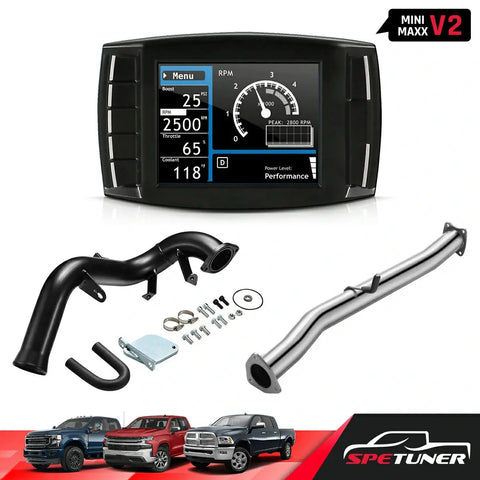
The complete performance upgrade for your LMM. This kit includes a high-flow exhaust, precision EGR hardware, and the necessary electronic tuning to eliminate regen cycles and prevent limp mode while boosting fuel economy.
Why is this the best choice for your LMM?
- Zero Guesswork: As the name implies, it’s truly "full". It includes the exact high-flow exhaust piping, the precision-machined EGR removal hardware, and most importantly, the necessary electronic tuning device.
- Perfect Fitment: The hardware is designed as a direct bolt-on replacement for your 6.6 LMM Duramax. You won't be fighting poorly bent pipes or misaligned flanges under your truck.
- Flawless Tuning: The included tuning ensures your LMM won't throw annoying Check Engine Lights or fall into Limp Mode. It safely optimizes your 6.6L LMM Duramax transmission and engine parameters to take full advantage of your newly freed-up airflow.
If you are ready to wake up your LMM engine, improve your fuel economy, and stop choking your LMM engine with its own soot, stop dealing with mismatched parts.
Disclaimer: The products and modifications discussed in this article are strictly for closed-course competition and off-road use only. Removing factory emissions equipment for vehicles driven on public streets and highways is illegal under federal and state laws.
FAQ
Q1: Do I absolutely need to tune my LMM if I just remove the DPF?
A1: Yes, it is mandatory. If you physically remove the DPF without flashing a custom tune to the ECM, the computer will detect missing pressure and temperature sensors, immediately forcing the truck into a restricted "Limp Mode."
Q2: Does the 2007.5-2010 LMM Duramax require DEF (Diesel Exhaust Fluid) removal?
A2: No. The LMM generation was manufactured before DEF (urea) systems became standard on GM trucks in 2011 (LML generation). Your delete process will only involve the DPF and EGR systems.
Q3: How much will deleting the DPF lower my Exhaust Gas Temperatures (EGTs)?
A3: Based on technical monitoring, removing the restrictive DPF can lower EGTs by 150°F to 200°F under heavy load. This significantly reduces thermal strain on engine components, particularly the turbocharger.
Q4: Is it safe to install an LMM delete kit myself?
A4: While bolt-on kits are designed to be user-friendly, modifying exhaust and engine components carries safety risks, especially regarding exhaust leaks and lifting heavy vehicles. I strongly recommend having a certified diesel mechanic perform the installation.
Q5: What is the technical difference between a 4-inch and 5-inch delete exhaust?
A5: What is the technical difference between a 4-inch and 5-inch delete exhaust? A 4-inch exhaust provides excellent velocity and airflow for stock to moderately tuned trucks, producing a deep but manageable sound. A 5-inch exhaust is better suited for high-horsepower competition builds, offering slightly lower EGTs but a significantly louder, more aggressive exhaust drone.
Q6: Why is an EGR delete considered beneficial for engine longevity?
A6: The EGR system routes abrasive soot back into the intake to lower combustion temperatures. Over time, this soot mixes with PCV oil vapors to create thick carbon sludge, which restricts airflow and can cause premature wear on piston rings and valves. Removing it ensures only clean air enters the combustion chamber.