Looking for EGR delete pros and cons because your truck feels weak, blows smoke, or throws EGR codes? Many owners then ask: “Should I delete EGR?” or “Is EGR delete good or bad?”
From Reddit users, many of them had mixed feelings:
- Real-world users report power/reliability gains—and inspection headaches.
- “Power and torque… better fuel economy on a conservative tune… better reliability… less carbon buildup.”
- “If you live somewhere with emissions testing, you’ll have a very hard time selling the truck.”
This guide breaks down the advantages of EGR delete and disadvantages of EGR delete in simple words so you can make a clear choice before wrenching.
What is an EGR in Diesel?
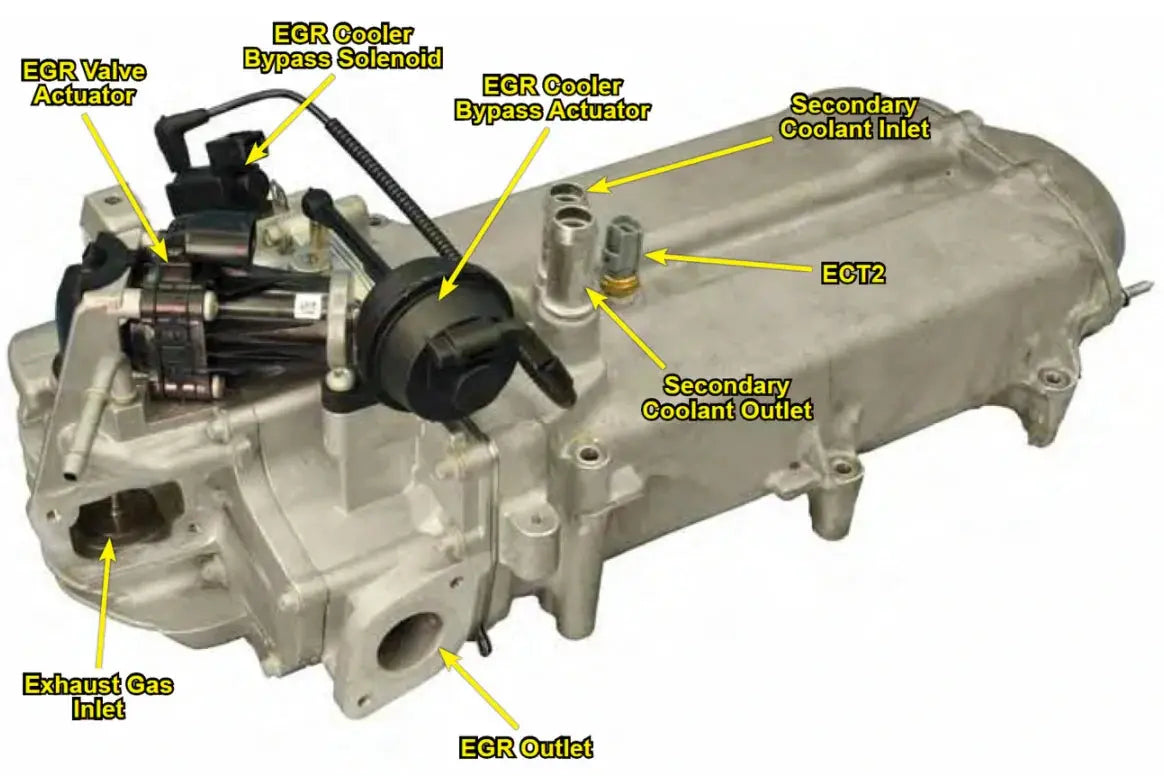
EGR stands for Exhaust Gas Recirculation. It routes a measured amount of exhaust back into the intake. That exhaust isn’t there to make power; it’s there to lower combustion temperature so the engine creates less NOx (nitrogen oxides), which are harmful air pollutants. Lowering those temps is how EGR helps meet emissions standards. In short, EGR is an emissions tool.
How EGR affects your day-to-day:
- Under certain conditions, the EGR valve opens to let exhaust mix with the fresh air charge.
- Many diesels add an EGR cooler so that the exhaust is cooled before re-entering the intake.
- Over time, soot in that exhaust can combine with oil vapor and form sticky deposits. Those deposits can clog EGR passages, hang up the valve, and coat intake runners and throttle plates. Result: rough idle, reduced power, codes, and repeated cleaning.
EGR helps the environment. But it can add maintenance, especially on trucks that tow heavy, idle a lot, see dusty conditions, or make many short trips.
What is an EGR delete?
An EGR delete removes or disables the EGR system and blocks the exhaust path feeding the intake. Owners do this to stop soot from re-entering the intake and to remove EGR-related failure points (valves, coolers, gaskets).
Critical legal note: For vehicles that operate on public roads in the U.S., tampering with emissions equipment (including EGR) is illegal under the Clean Air Act and state laws. Penalties can be serious. This is why the common guidance is: off-road/race use only where permitted by law.
From a practical standpoint, a complete EGR delete kit often includes ECU tuning so the truck doesn’t throw codes while “looking” for EGR flow. Quality tuning matters.
Advantages of EGR Delete
These are the advantages of the EGR delete that off-road and competition users value:
1. Cleaner intake path
With no exhaust routed into the intake, soot buildup slows down. Runners, throttle plates (where equipped), and EGR passages stay much cleaner. A cleaner path means more consistent airflow and easier service down the road.
2. More consistent power delivery
When an EGR valve sticks, you feel it—a stumble here, a flat spot there, or random codes. Remove that variable and power delivery often feels more steady and repeatable under load (especially with a matching off-road tune).
3. Fewer EGR-related failure points
No EGR valve, cooler, or associated hoses/sensors to fail, leak, or crack. That’s fewer parts to diagnose or replace, and fewer chances for coolant-into-intake events from a failed cooler.
4. Simpler maintenance
Without soot washing back through the intake, you typically clean less often. Future jobs (intake off, turbo service, etc.) can be faster because you’re not scraping layers of carbon first.
5. Intake air can be cooler and cleaner
You’re feeding the engine more fresh air and less hot recirculated gas. Cooler, cleaner intake charge can support stable combustion and better towing manners.
6. Possible MPG stability
Some off-road users report modest fuel economy gains or more consistent MPG after deleting EGR with proper tuning. Results vary by platform, load, and driving style, so think of it as a possible perk rather than a promise.
Disadvantages of EGR Delete
Now for the disadvantages of EGR delete—and these matter:
1. It’s often illegal on public roads
For street-driven vehicles in the U.S., removing or rendering inoperative emissions controls is illegal. That can mean fines, inspection failures, and enforcement action. Laws also exist at the state level. This is the #1 reason a delete is not a fit for many owners.
2. Warranty and dealer support risks
Deletes can void warranty coverage related to the engine/emissions system and may cause dealers to decline certain repairs.
3. Inspection, registration, and resale problems
If your state or province requires emissions tests or visual inspections, a deleted truck will likely fail. Resale can be harder in markets that expect compliance.
4. Requires proper tuning
Delete the hardware without a matching tune, and you’ll invite check-engine lights, limp mode, and driveability issues. Poor tuning can harm performance and reliability.
5. Environmental and liability concerns
EGR is there to reduce NOx. Removing it can increase NOx under some conditions. There can also be insurance or liability questions if a claim review flags major emissions modifications on a street-driven vehicle.
EGR Delete Pros and Cons Table
| Pros (Off-Road/Race Where Permitted) | Cons (Street-Driven Reality) |
| Intake stays cleaner (less soot) | Illegal for public road use in many places; fines possible |
| Steadier power delivery | Can void warranty |
| Fewer failures of EGR parts | Likely to fail emissions/inspection |
| Simpler service and cleaning | Needs proper ECU tuning |
| Intake charge can be cooler/cleaner | Environmental/NOx concerns; possible insurance complications |
| Some users see modest MPG stability | Can hurt resale in compliant markets |
Ready to build a stronger, cleaner-breathing engine for off-road or racing use? Explore our Diesel Delete Kits for Ford, Dodge & GMC
When an EGR Delete Makes Sense
When your truck is off-road or race-only and your local rules allow it.
Good fit examples:
- Dedicated tow rig for the track or farm: Lives off-highway, pulls heavy, and you need predictable power with fewer EGR failures.
- Work truck on private property: Hours of on-site operation, no public-road use.
- Competition build: You’re already tuned for racing and want a simpler, cleaner intake path.
In those cases, the advantages of EGR delete (cleaner intake, fewer failure points, stable airflow) may outweigh the drawbacks—as long as the use is legal and tuning is correct.
When You Should Not Delete Your EGR
If you drive on public roads with inspections/warranty/resale needs—don’t delete.
Stick with repair or legal mitigation if you must stay compliant; on-road tampering is widely prohibited.
Is an EGR Delete Good or Bad?
“Is EGR delete good or bad?” It depends on use and rules:
- Good (for off-road/race where legal): Cleaner intake, fewer EGR failures, more stable airflow, simpler service.
- Bad (for public roads): Legal risk, inspections, warranty issues, and potential environmental impact.
If you’re street-driven and need to stay compliant, a delete can turn into a hassle fast. If your truck is off-road only and tuned properly, it can be a reliable way to eliminate repeat EGR problems—where permitted by law.
EGR Delete vs Repair vs EGR Reroute
Repair: Best for street use—replace/clean parts, keep it legal.
Reroute/Mitigation: Reduce soot exposure while staying compliant (maintenance habits/approved updates).
Delete: Off-road/race only, where permitted, with proper tuning.
Read more: EGR Delete vs Blocker Plate
Should I Delete My EGR? (quick decision guide)
Use this quick checklist:
Choose REPAIR if…
- You drive on public roads.
- You must pass emissions or keep warranty coverage.
- You value easy resale and insurance peace of mind.
Try REROUTE/MITIGATION if…
- You want less soot and longer service intervals, but must stay compliant.
- You can commit to maintenance and small legal upgrades.
Consider DELETE (off-road/race only) if…
- Your truck is not used on public roads and local rules permit it.
- You’ve had repeat EGR failures and want a simpler intake path.
- You will invest in quality tuning and upkeep for an off-road setup.
Find more in our related articles
- Should You Delete EGR or DPF? Pros, Cons, and Expert Advice
- Pros and Cons of 6.7 Powerstroke EGR Delete Kits
Summary
No one buys a diesel to fight warning lights. You want torque, range, and reliability. EGR exists to cut NOx, but it can add soot to the intake and long-term maintenance on hard-working trucks. The right path comes down to how and where you use your rig:
- Public roads + inspections? Repair or use legal mitigation.
- Dedicated off-road/race use where permitted? A delete with quality tuning can simplify your setup and reduce soot-driven headaches.
Whatever you choose, make the call with eyes open—on the mechanical, legal, and budget sides.
FAQs
Q: Does EGR delete improve MPG?
A: Sometimes; reports vary. Many owners see steadier MPG after deleting/tuning off-road; results depend on setup and driving.
Q: Will EGR delete damage my engine?
A: Not if tuned right and used off-road; poor tuning causes problems. Deleting removes failure points but demands correct calibration and maintenance.
Q: Should I delete my EGR?
A: If you drive the truck on public roads and must pass inspection, the practical answer is no—repair or consider legal mitigation instead.
If your truck is off-road/race only where allowed, a delete plus quality tuning can reduce soot-related issues. Know your local rules first to confirm whether it is illegal or legal.
Q: What happens if I delete EGR without tuning?
A: Expect CELs and possible limp mode. The ECU expects EGR flow; a proper tune prevents errors.
Q: Does EGR help the environment?
A: Yes. EGR lowers combustion temperature to reduce NOx emissions. Removing EGR can increase NOx in some conditions—one reason on-road deletes face strict rules.
Q: Will I pass inspection with an EGR delete?
A: In most places, no. If your area performs visual checks or OBD/emissions tests, a deleted EGR system will likely fail for on-road use.