The Bottom Line:
A DPF delete is the single most effective way to protect your 3.0L Powerstroke from oil dilution and catastrophic backpressure.
By removing the restrictive factory exhaust and flashing a custom tune, you gain 3-5 MPG, kill throttle lag, and eliminate the risk of "Limp Mode" forever. Note: Strictly for off-road/race use.
Quick Specs:
- Estimated MPG Gain: +3 to +5 MPG
- Estimated HP Gain: +40 to +60 HP (Highly tune-dependent)
- Installation Time: 3-5 Hours
- Hardware Needed: 3.5" to 4" Race Pipe + Custom ECU Tune
- Emissions Status: Off-Road / Race Use Only
Common 3.0L Powerstroke Problems: DPF Clogging & Oil Dilution
When Ford dropped the 3.0L V6 Powerstroke into the F-150, it brought diesel efficiency to the half-ton market. However, from an engineering perspective, it also brought a significant flaw in thermal management compared to its 6.7L big brother. Check these common issues of 3.0 Powerstroke:

The Thermal Management Flaw
Unlike a heavy-duty F-250 towing 15,000 lbs, an F-150 often serves as a daily driver, navigating stop-and-go city traffic. In these low-load scenarios, the exhaust gas temperatures (EGTs) rarely reach the 1,100°F+ required for passive regeneration. As a result, the truck relies heavily on active regeneration, spraying diesel directly into the exhaust stroke to artificially raise DPF temperatures.
The Hidden Danger: Oil Dilution
Frequent active regenerations lead to a severe mechanical issue: oil dilution. Unburnt diesel fuel inevitably washes past the piston rings and into the crankcase. Over time, this diesel dilutes your engine oil, lowering its viscosity and compromising the lubrication of critical components like the crankshaft and turbo bearings. It’s a mechanical headache that many owners don't realize is happening until they check their dipstick and smell raw fuel.
3.0 Powerstroke DPF Delete Cost Comparison: Stock vs. Deleted
When evaluating a DPF delete, the initial cost of hardware and tuning is often offset by long-term savings. Here is a realistic 50,000-mile breakdown comparing a stock F-150 3.0L to a deleted one.
| Expense Category | Stock F-150 3.0L (Emissions Intact) | Deleted F-150 3.0L (Race Pipe + Tune) |
|---|---|---|
| Fuel Costs (Assuming $4.00/gal) | $10,526 (Avg. 19 MPG) | $8,695 (Avg. 23 MPG) |
| DEF Costs | ~$150-$200 | $0 |
| Sensor/DPF Maintenance | $500 - $2,500 (If DPF clogs out of warranty) | $0 |
| Hardware & Tuning Cost | $0 | ~$1,500 - $2,000 (One-time) |
| 50k-Mile Total Estimated Cost | $10,676 - $13,226 | $10,195 - $10,695 |
The Break-Even Point: Depending on fuel prices and how quickly your factory sensors fail, the hardware and tuning costs typically pay for themselves within the first 35,000 to 50,000 miles through fuel savings and avoided dealership maintenance alone.
Pros and Cons of a 3.0 Powerstroke DPF Delete
Transparency is crucial in the tuning industry. Before you turn a single wrench, you need to weigh the realities of deleting your truck.
The Pros (The Gains)
- Zero Backpressure: Removing the DPF and SCR honeycomb structures allows the turbo to spool up significantly faster. Throttle response becomes instant.
- No More Limp Mode: Say goodbye to the dreaded "Exhaust Filter Full - Reduced Engine Power" message stranding you on the side of the highway.
- Engine Longevity: Halting active regenerations stops fuel wash and oil dilution, keeping your engine oil pure.
The Cons (The Reality Check)
- EPA & Legalities: This cannot be overstated. Deleting emissions equipment violates the Clean Air Act. These products are strictly for closed-course, off-road, or race use only. You will not pass a state emissions inspection.
- The Smell & Soot: Without a DPF, your truck will smell like a traditional diesel. Depending on how aggressive your tune is, you may also see black soot on hard acceleration.
- Warranty Denial: If you roll into a Ford dealership with a straight-piped exhaust and a flashed ECU, your powertrain warranty will be voided instantly.
What is the Best DPF Delete Race Pipe for the 3.0L F-150?
Not all exhaust pipes are created equal. For the 3.0L V6, exhaust flow dynamics are incredibly specific.
Going too large (like a 5-inch pipe) on a 3.0L engine causes a loss in exhaust gas velocity, which kills your low-end torque. The engineering sweet spot for this specific engine is a 3.5-inch to 4-inch diameter.
This is why we recommend the SPEtuner 3.0 Powerstroke DPF Delete Race Pipe.
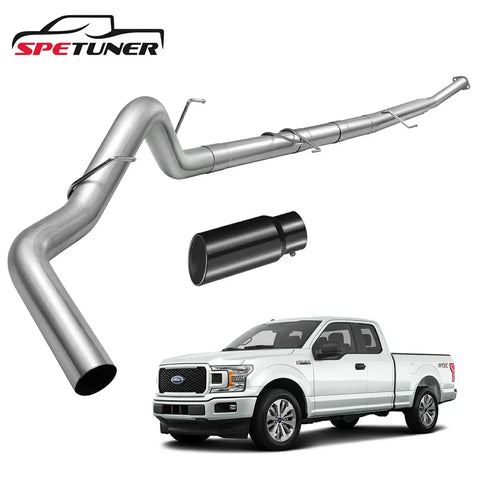
Eliminate exhaust restrictions and backpressure. Our heavy-duty race pipe is precision-engineered for a perfect fit, allowing your 3.0L Powerstroke to breathe freely, run cooler, and last longer.
- Material Science: Built to resist corrosion, which is vital since the undercarriage of a truck takes a beating from road salts and debris.
- Fitment Realities: F-150 factory exhaust bolts are notorious for rusting and snapping. A high-quality kit includes precise flanges and pre-drilled, correctly threaded bungs for your sensors, ensuring you aren't fighting alignment issues under the truck.
How to Delete a 3.0 Powerstroke: Crucial Tuning Steps
If there is only one piece of advice you take from this guide, let it be this: Never unbolt your exhaust before you flash the ECU.
If you install the physical race pipe and turn the key on a stock ECU, the truck's computer will immediately detect a catastrophic lack of backpressure and missing sensors. It will throw dozens of Check Engine Lights (CELs) and permanently lock the truck into limp mode, making it incredibly difficult to flash the new tune afterward.
The Protocol:
- Connect a reliable tuning platform to your OBD-II port. We highly recommend utilizing SPEtuner EFILive AutoCal V3 Tuner & Tune Package for the Ford 3.0L Powerstroke F150.
- Download and flash the "Delete/Race" tune to your truck's ECU.
- Confirm the flash was successful.
- Then, get under the truck and swap the hardware.
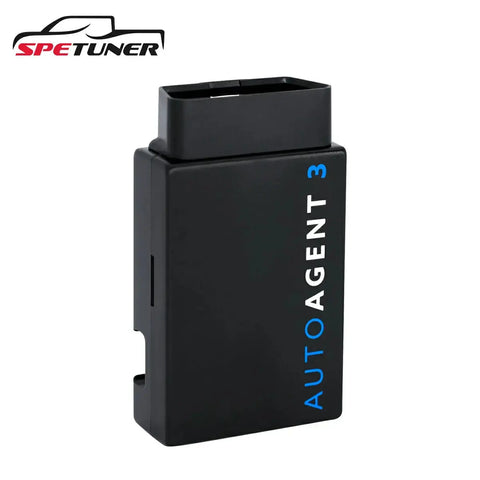
The essential software for your delete. Kills throttle lag, optimizes shift points, and allows for seamless cloud-based "Delete" tuning directly from your smartphone.
These systems allow for stable and reliable tuning, meaning you can ensure the file updates are accurately flashed to your ECM, making the software side of the delete seamless.
FAQs
Q1: Will a DPF delete make my 3.0 Powerstroke extremely loud?
A1: Not nearly as loud as a 6.7L Powerstroke or a Cummins. Because the 3.0L is a V6, the exhaust pulse is smoother. It will definitely have more turbo whistle and a deeper growl, but adding a high-flow muffler to your race pipe setup can keep it very low-key for daily driving.
Q2: Can I pass the OBD-II emissions plug-in test after a delete?
A2: Absolutely not. When a truck is tuned for a delete, the readiness monitors for the EGR, DPF, and SCR are essentially turned off or "frozen" to prevent a Check Engine Light. Any state emissions computer plugging into your OBD-II port will instantly flag these incomplete monitors.
A3: Should I delete the EGR at the same time?
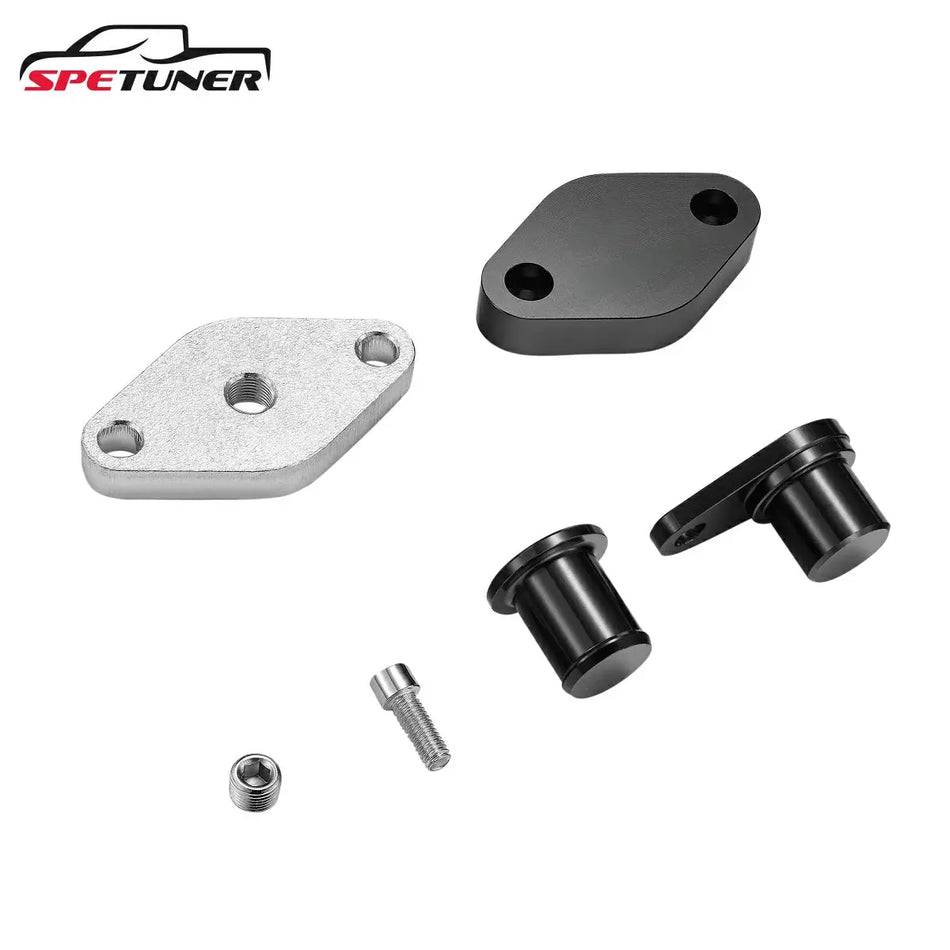
A3: Yes. If you are already taking the truck off-road and tuning it, deleting or blocking off the EGR (Exhaust Gas Recirculation) is highly recommended. Unplugging it via tuning is a good start, but physically removing it prevents future catastrophic coolant leaks, which the 3.0L EGR coolers are prone to as they age.

Lars
Diesel Performance Engineer | 15+ Years EXPERIENCE
"Empower Your Beast: Run Cooler, Pull Harder, Last Longer."