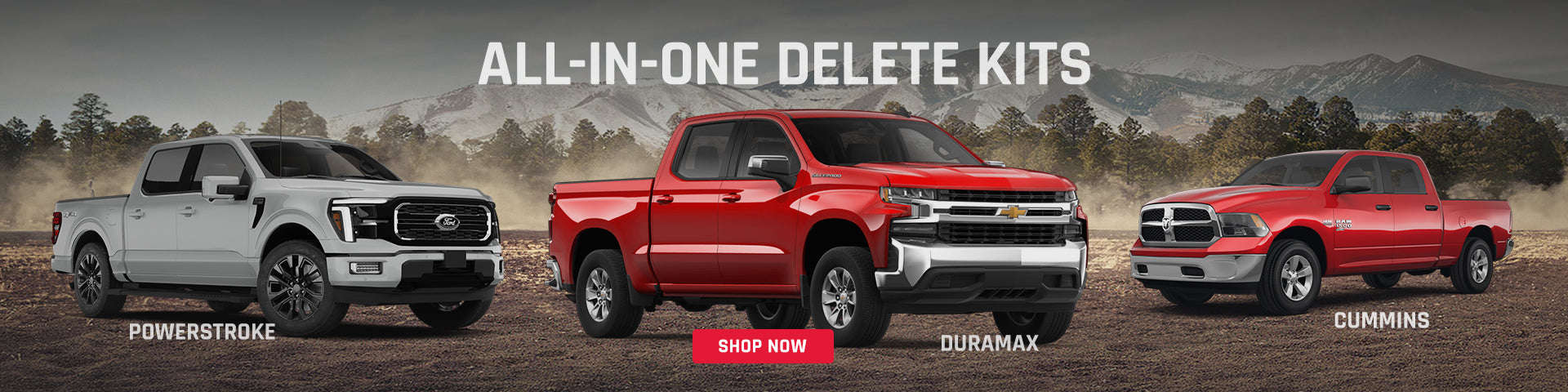
Diesel truck owners often encounter the term “DPF delete,” i.e., the removal of the diesel particulate filter, when exploring ways to improve engine performance and reliability.
This article covers DPF system fundamentals, the DPF delete procedure, its benefits and risks, and guidance for informed decision-making.

Understanding the Diesel Particulate Filter (DPF)
The Diesel Particulate Filter (DPF) is a critical component in modern diesel engines. It captures soot and other exhaust particles to reduce harmful emissions.
- How it works: The DPF captures soot in the filter and burns accumulated soot during a regeneration cycle, which may use additional fuel to raise exhaust temperature.
- Challenges: Regeneration may cause temporary reductions in engine power output and fuel economy. Over time, excessive soot or ash accumulation can restrict the DPF and contribute to reduced performance.
- High costs: Cleaning or replacing a clogged diesel particulate filter can be expensive, particularly when replacement hardware, sensors, diagnostics, and labor are required.
What Is a DPF Delete?
A DPF delete involves removing the DPF from the exhaust system and reprogramming the vehicle’s ECU to run without it. This modification typically employs a DPF delete kit containing:
- Exhaust pipes that serve as a physical replacement for the DPF section.
- A tuner or engine control unit (ECU) programmer capable of disabling regeneration cycles and preventing DPF-related error codes.
DPF delete installation bypasses the particulate filter, increasing exhaust-flow capacity and reducing the restriction associated with the factory filter.

Benefits of DPF Delete
1. Enhanced Performance
Removing the DPF can reduce exhaust restriction and may improve throttle response, horsepower, and torque when paired with appropriate engine calibration. Reduced backpressure can also support smoother exhaust flow under heavy loads or towing conditions.
2. Better Fuel Economy
Eliminating active DPF regeneration removes the additional fuel consumption associated with those regeneration events. Reported fuel-economy improvements in modified off-road diesel applications commonly fall in the approximate 5% to 15% range, although actual results vary substantially with engine platform, tune, gearing, driving conditions, load, and regeneration frequency before modification.
3. Lower Maintenance Costs
Removing the diesel particulate filter eliminates DPF-specific cleaning and replacement requirements. It also eliminates maintenance concerns directly associated with a clogged DPF and certain DPF-related sensors.
4. Increased Longevity
Reducing the number of emissions-system components can eliminate several DPF-related failure points. However, there is no reliable industry-wide mileage increase that can be attributed specifically to DPF removal because engine life depends heavily on maintenance, tuning, operating temperature, load, fuel quality, and driving conditions.

Types of DPF Delete Kits
1. By Replacement Scope
- Downpipe Back: Replaces exhaust piping downstream of the downpipe or emissions section, depending on the specific vehicle and kit design.
- CAT & DPF Race Pipe: Replaces the DPF and catalytic-converter section with a race pipe designed for compatible off-road applications.
- Turbo Back: Replaces exhaust piping from the turbocharger rearward and generally provides the most complete exhaust-system replacement.
2. By Size
- Different exhaust diameters: Larger-diameter exhaust systems can provide additional flow capacity, but the practical benefit depends on engine output and exhaust-gas volume. Selection should be based on performance targets, fitment, sound preference, and budget.
3. By Engine Model
- Kits are commonly offered for Duramax diesel, Cummins, and Ford Powerstroke engines, with application-specific hardware designed around each truck’s exhaust layout, sensors, chassis, and model year.
4. With or Without Muffler
- Removing or replacing the muffler can reduce a source of exhaust restriction, but there is no dependable industry-wide percentage for airflow improvement because muffler design and total system restriction vary significantly. Sound levels can commonly increase by roughly 3 to 8 dB, depending on the vehicle, exhaust diameter, turbo configuration, measurement distance, and operating condition. Evaluate your preferences against local noise regulations.
5. By Material
- Stainless Steel 409: Offers good corrosion resistance, heat tolerance, and long-term durability for diesel exhaust applications.
- Aluminized Steel: Commonly costs approximately 20% to 40% less than comparable stainless-steel exhaust components, but it generally provides less corrosion resistance in environments exposed to road salt, moisture, or harsh winter conditions.
How to Install a DPF Delete Kit
Installing a DPF delete kit typically involves several specific procedures.
- Disconnect DPF sensors.
- Detach the DPF by removing the connections, clamps, brackets, and fasteners securing it.
- Fit the replacement pipe. Connect it to the appropriate exhaust section and secure it beneath the chassis according to the kit manufacturer’s instructions.
- Reprogram the ECU using compatible calibration software or a tuner designed for the application where legally permitted.


Using the right tools and following the manufacturer's instructions helps ensure a smoother installation. While experienced DIY owners may handle basic mechanical work, professional assistance is recommended for complex exhaust fitment, electrical diagnosis, or calibration work.
Is DPF Delete Legal?
In the U.S. and Canada
Removing or disabling federally required emissions equipment on a vehicle operated on public roads can violate applicable emissions laws and regulations. Requirements and enforcement can vary by jurisdiction, so owners should verify federal, state, provincial, and local regulations before modifying an emissions system.
Off-Road Use Only
Some DPF-delete hardware is marketed for dedicated racing, competition, export, or other non-road applications. Eligibility depends on the vehicle, jurisdiction, and actual use. Always verify applicable regulations before performing an emissions-related modification.
Environmental Considerations
DPF removal increases particulate-matter emissions because the filter can no longer capture soot from the exhaust stream. Depending on the accompanying calibration and emissions-system changes, overall emissions characteristics may also change.
Particulate pollution is associated with respiratory and cardiovascular health risks. However, there is no scientifically defensible single percentage that can be assigned to the public-health effect of one modified diesel truck because exposure depends on emissions rate, operating time, population proximity, atmospheric conditions, and many other factors.
If you modify an off-road diesel application, consider the emissions consequences as well as performance, reliability, cost, and applicable regulatory requirements.
Helpful Resources
FAQs About DPF Delete
Q1: What are the potential benefits of a DPF delete?
A1: In dedicated off-road applications, owners typically consider DPF removal to reduce exhaust restriction, eliminate regeneration events, and remove DPF-specific maintenance requirements. Actual performance and fuel-economy changes depend on the vehicle and calibration.
Q2: Is DPF delete legal for on-road vehicles?
A2: Removing or disabling required emissions equipment on road-going vehicles can violate emissions regulations. Requirements vary by jurisdiction, so applicable federal, state, provincial, and local rules should be checked before modification.
Q3: How can removing the diesel particulate filter affect fuel economy?
A3: Removing active regeneration eliminates the additional fuel used during regeneration events. In modified off-road applications, reported fuel-economy changes commonly fall around 5% to 15%, but results vary significantly by engine, tune, driving conditions, and previous regeneration frequency.
Q4: Does DPF removal affect emissions testing?
A4: Yes. Removing required emissions equipment can cause a vehicle to fail visual, diagnostic, or tailpipe emissions inspections where those inspections apply.
Q5: How much horsepower can a DPF delete add?
A5: There is no universal horsepower gain from physically removing the DPF alone. In combined delete-and-tune off-road setups, reported gains on otherwise lightly modified diesel trucks are often in the approximate 10 to 50 horsepower range. More aggressive calibrations and supporting modifications can produce substantially different results.
Conclusion
A DPF delete changes the exhaust restriction, regeneration strategy, and emissions characteristics of a diesel truck. In dedicated off-road or competition applications, it may provide performance and maintenance benefits, but there is no credible universal percentage improvement in performance, reliability, or engine life that applies across all diesel platforms.
If you are evaluating DPF delete hardware for an eligible off-road, competition, or export application, prioritize correct vehicle fitment, durable materials such as 409 stainless-steel exhaust tubing, secure mounting hardware, and application-specific calibration support.
Comply with all applicable regulations and operate modified equipment responsibly. For additional information about diesel modifications and emissions compliance, visit the EPA or consult a qualified diesel technician familiar with your specific engine platform.
Installing a DPF delete kit modifies a diesel truck’s exhaust and engine-management strategy and can materially change exhaust flow, engine output characteristics, emissions, and maintenance requirements.